What’s the best place to build a garden pond?
Deciding upon the best place to build a garden pond needs plenty of thought. You want a location that allows you to enjoy the best views of your pond and perhaps areas where you can sit close by to relax and enjoy it in all its glory.
There are also practical considerations such as having enough sunlight and shelter, problems with overhanging trees, and safety concerns.
We’ll talk you through all the main considerations, so that you can make an informed choice on where to build your new pond.
The best position for viewing and enjoying your pond
There’s a lot to consider when deciding the best place to build a pond, but probably top of the list is trying to find the best position for your viewing and enjoying.
It’s a good idea to think about where you are normally going to be viewing your pond from. Do you want a great view from your kitchen window or dinning room? Do you want to enjoy your pond while sitting on the patio enjoying a morning coffee or evening meal?
Your daily routine is going to dictate where and how you get to enjoy your pond. So we’d suggest placing your pond in such a way that you can view it from your favorite living spaces.
How much shade does a pond need?
In most gardens there are areas of morning, afternoon, and/or evening sunshine. Any of which may seem good locations for a pond. But you are probably wondering exactly how much shade a pond needs? Our advice would be to opt for full sun or partial shade and here’s why…
Pond plants need plenty of sunlight in order to flourish. They are the corner stone of any healthy garden pond. They provide essential habitat for wildlife, and play a vital role in maintaining good water quality. They consume organic waste that otherwise can contribute to problems with nuisance algae. They also keep your pond water oxygenated, preventing it from becoming stagnant and smelly.
It is therefore best to locate your pond where it will receive direct sunlight for at least half of the day.
Should I build a pond under trees?
People often overlook the challenges of maintaining a garden pond built under trees. They obviously tend to create shade, but provided your pond spends at least half the day in the sun, this should be enough for your pond plants to thrive.
The main problem with trees is that they deposit a considerable amount of debris into your pond. This includes vast amounts of leaves in the autumn, plus twigs, branches, seeds, insects, and pollen over the course of the year.
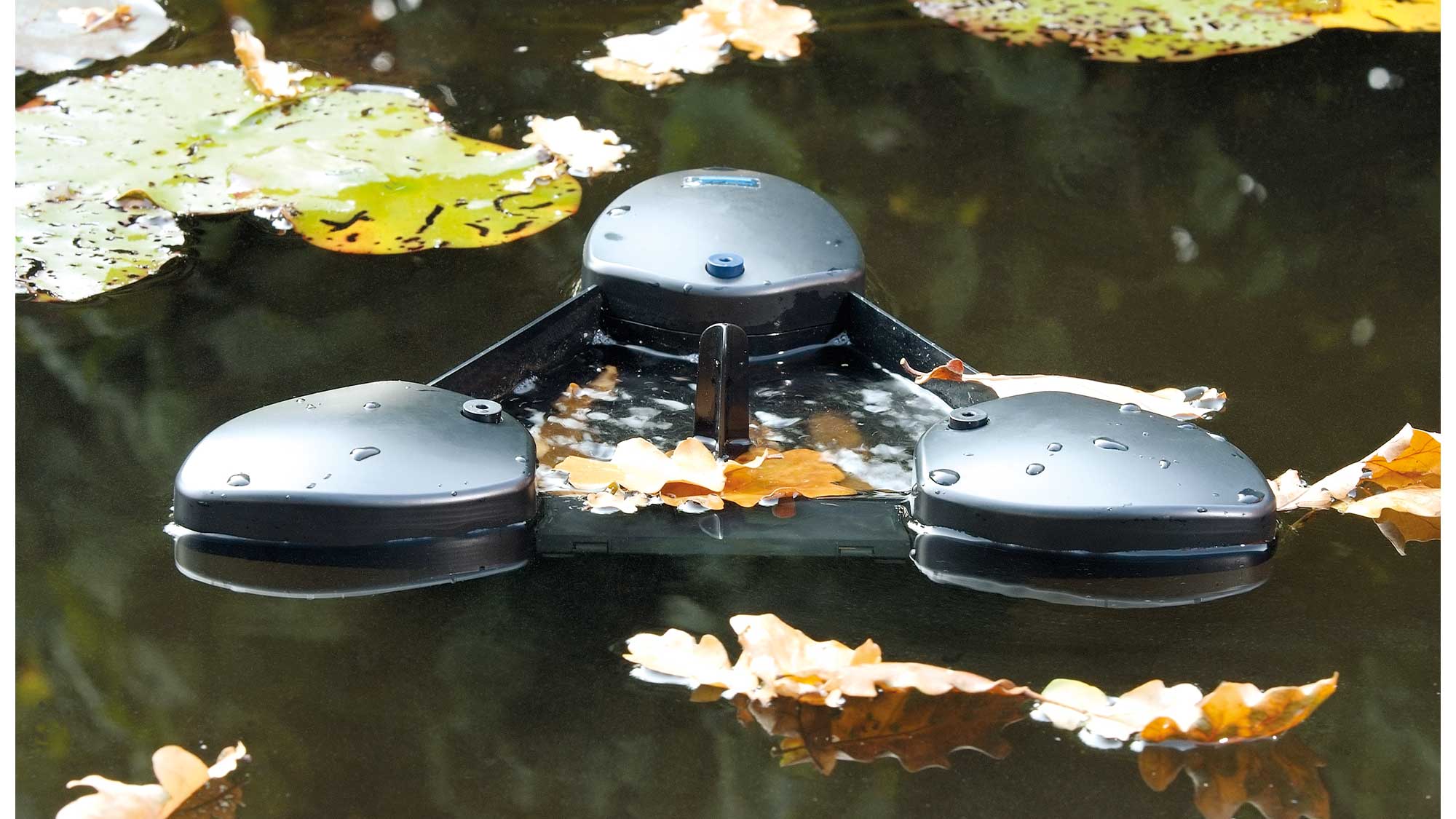
This is not to say you should completely discount the idea of positioning a pond under one or more trees. But you must be prepared to clean your pond more regularly. This in itself may be enough to put you off.
Using a pond net cover to collect falling leaves in the autumn is a good idea. As is investing in a pond vacuum cleaner to suck up leaves and excess sediment.
Installing a pond skimmer to harvest fallen debris and keep the surface of your pond clean is a very sensible option. There are a wide range of surface skimmers available. They can be built into your pond recirculation and filtration system, or installed as standalone ‘plug in and play’ pieces of pond equipment such as the Oase SwimSkim 25 and SwimSkim 50.
But the bottom line is that building a pond under trees tends to mean you have to work that little bit harder to maintain a clean and healthy pond.
What's the best place to build a garden pond to promote wildlife?
With freshwater habitats and species under threat both in the UK and globally, we cannot underestimate the importance of garden ponds. They promote biodiversity and habitat for some of Britain’s rarest species. But what’s the best place to build a garden pond to promote wildlife?
Perhaps more important than the physical location, is what is found around the pond itself. The terrestrial habitat surrounding your pond provides safe cover and corridors to your pond for amphibians in particular.
Frogs, newts and toads spend a good deal of time on land where they have plenty of food and cover from predators such as birds. They visit ponds to mate and lay their eggs in spring, but will generally spend time in and out of the water.
Dense terrestrial planting around a pond provides fabulous habitat for amphibians. So be sure to think about what planting you already have, and also what you could plant next to your pond. This could include areas of shrubs, borders of bedding plants, and areas of wild grasses or meadow.
In addition to plants, hard structures such as log piles and outcrops of rocks also provide superb habitat and cover from predators such as birds.
Last but not least, you should try to position your pond in a sheltered location. Any cover you can provide from icy winds and frosts will greatly benefit wildlife. Cold snaps of even a few days can wipe out entire wildlife populations. Again, plenty of planting around your pond will help to shield it from the wind and insulate it during the coldest periods of the year.
Avoid using a pond liner in areas with poor drainage
Pond liners are a fantastic means of tanking a garden pond. However you should take great care to avoid using a pond liner in areas with poor drainage.
If you install a pond liner in places where your water table is naturally high or the ground is often boggy, water can build up under the liner itself. This ‘ballooning’ is highly undesirable and can cause the liner to lift right off the bottom of your pond. It is therefore wise to choose a pond location which is either higher up and/or drains freely even in winter.
If you have no option to build elsewhere you may want to consider building a natural bog garden without a pond liner. Alternatively you could consider a fibre glassed, reinforced concrete pond.
What is the safest place for a garden pond?
With so many things to consider when locating a new pond, it is easy to overlook safety. When choosing the safest place to build a garden pond you need to think about children, pets, and even adults.
As a rule it is best to avoid positioning your pond near to narrow or slippery walkways. It is also sensible to have areas where you can approach and enjoy your pond without tripping or slipping.
That is not to say you should hide your pond away in a corner. You want your pond to be on show and readily enjoyed. But careful consideration should be made to prevent accidents.
Shielding one side of the pond by placing it against a fence or hedgerow can be a good way to mitigate some risks. Fencing and a gate into a pond area can be a good way to prevent children gaining accesss to a pond. However it is adviseable to always supervise young children in the garden where water is present.
Pets tend to take great interest in ponds. Fences and natural barriers are generally very effective at keeping pets away from ponds. Cats are the exception being able to scale just about any barrier.
Whatever location you choose for your pond, be sure to make it easy for pets, wild mammals, and children to get out easily should they fall in. Marginal shelves and steps are a good idea. They also have the added benefit of giving you easier access when it comes to cleaning and maintaining your pond.
Need expert help with designing your new pond?
For expert advice on any aspect of pond design and building we recommend getting in touch. With many years experience building and maintaining ponds for clients we can help ensure you have the very best pond building experience.
We are here to help you get it right – first time, every time!
Call us today on 0845 228 22 33