If you’re looking to transform your garden, pond, or outdoor feature after dark, the Oase LunAqua Connect system is one...
Read MorePreventing nuisance pond algae is simple once you know how. In this guide, we explain the causes of nuisance pond algae, the most common types, and how best to prevent them growing in your pond.
Algae are primitive plants, and like all plants they thrive on sunlight and nutrients to grow. This is why algae tend to be more of a problem in Spring and Summer, and in ponds with excessive amounts of waste.
All ponds accumulate waste over the year from falling leaves and debris, pollen and insects, uneaten fish food, and fish waste. As the waste breaks down, nutrients such as nitrates and phosphates are released which plants and algae thrive on.
The most common pond algae problems are green water, blanket weed, and duckweed. Identifying which one you have is easy, and helps you choose the best solution. Let’s look at each of these in turn:
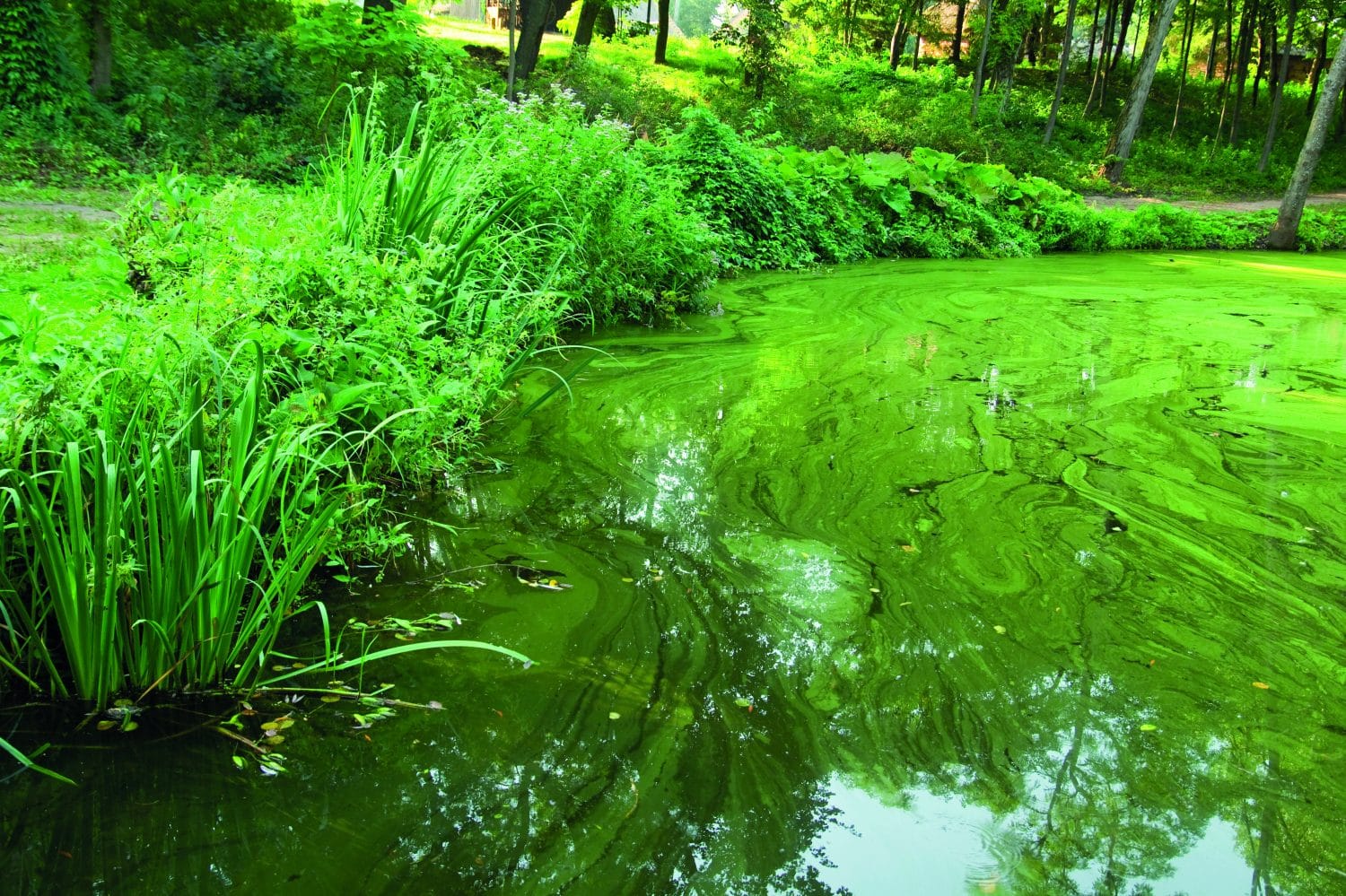
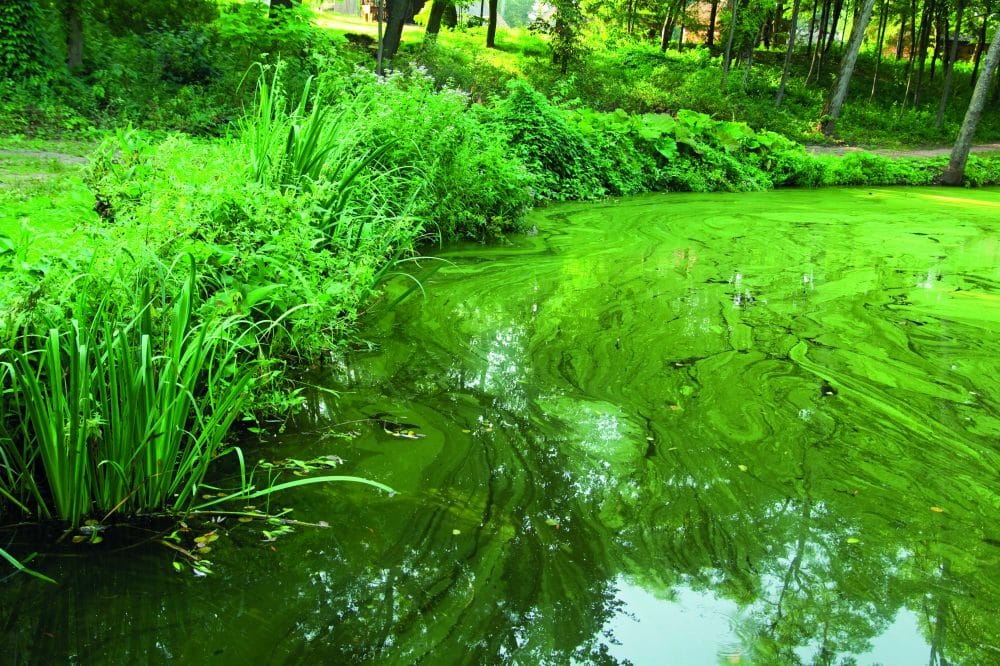
Green water is when your pond water literally looks green. Depending on how bad it is, you may not be able to see very far into the water and in extreme cases your pond can look like ‘pea soup’. Green water is caused by blooms of unicellular algae (single cell plants) that divide rapidly in sunny, nutrient-rich pond water.
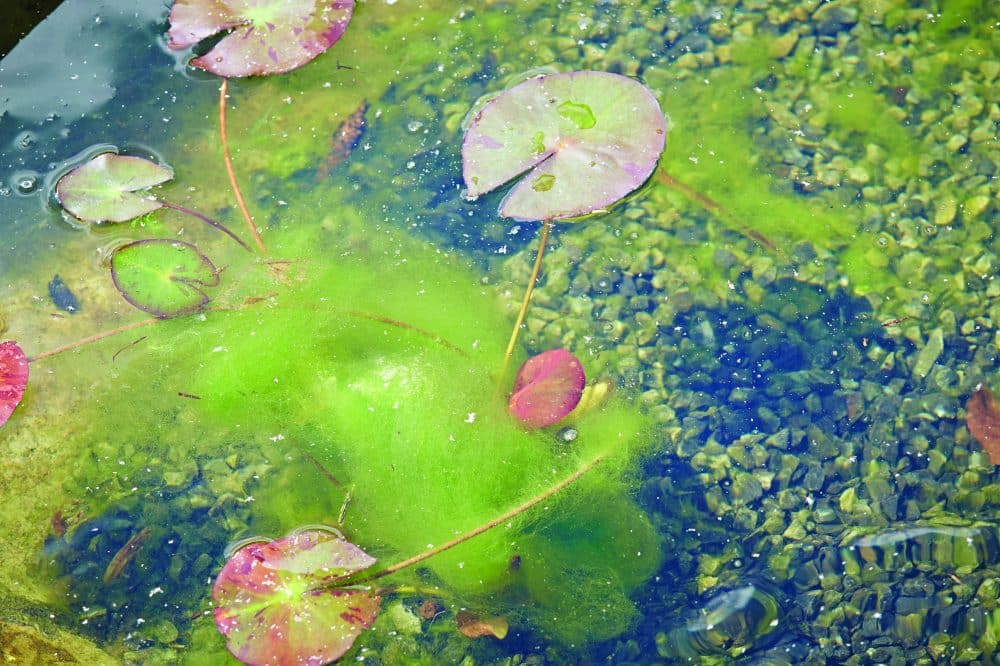
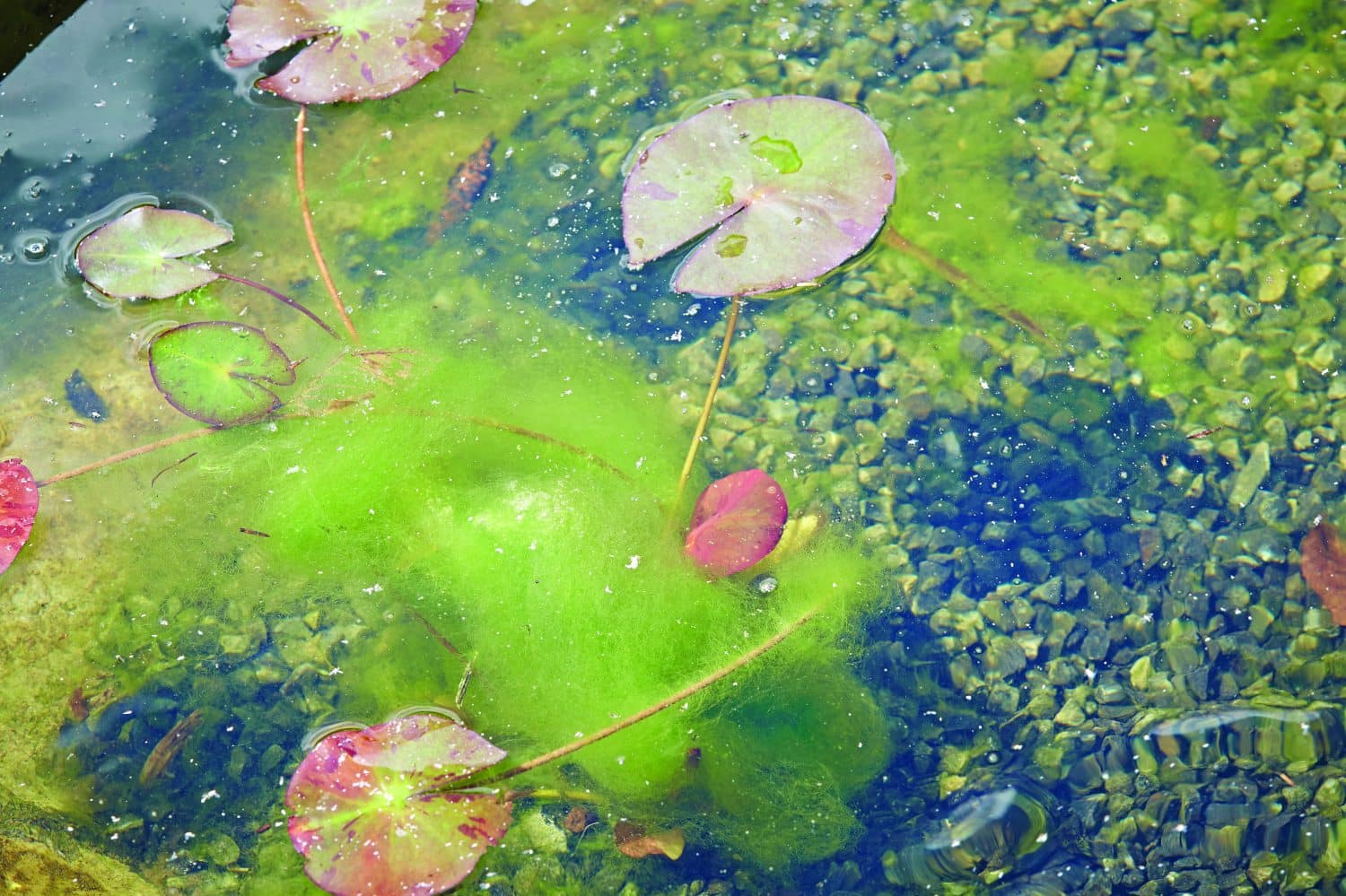
Blanket weed is a stringy, fibrous green algae that grows in thick green ‘blankets’ on the walls and base of your pond. It is hard to remove completely with a net or brush as it anchors to surfaces and regrows readily.
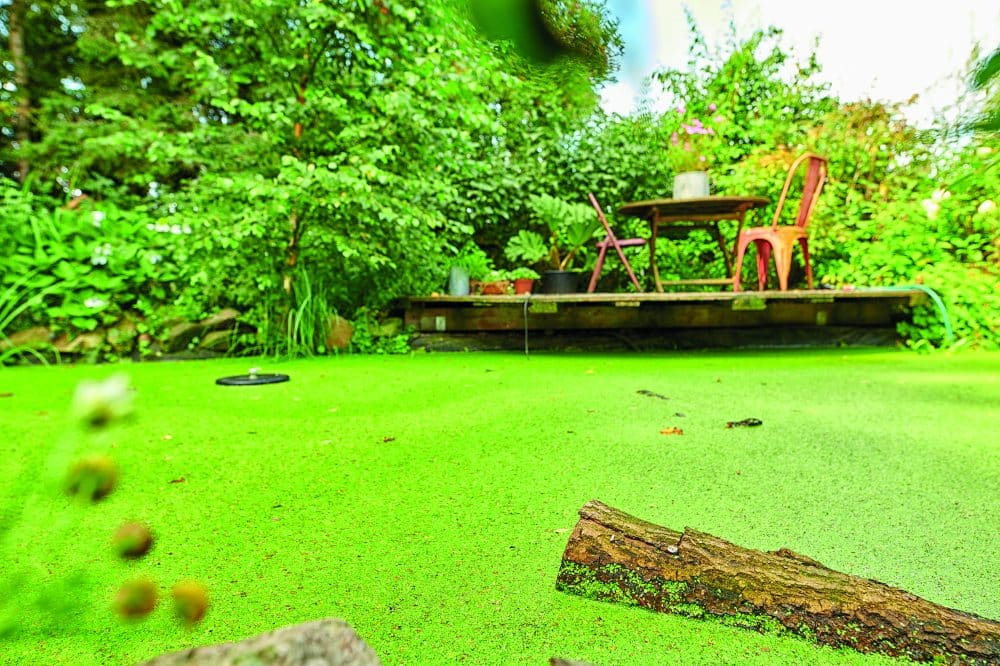
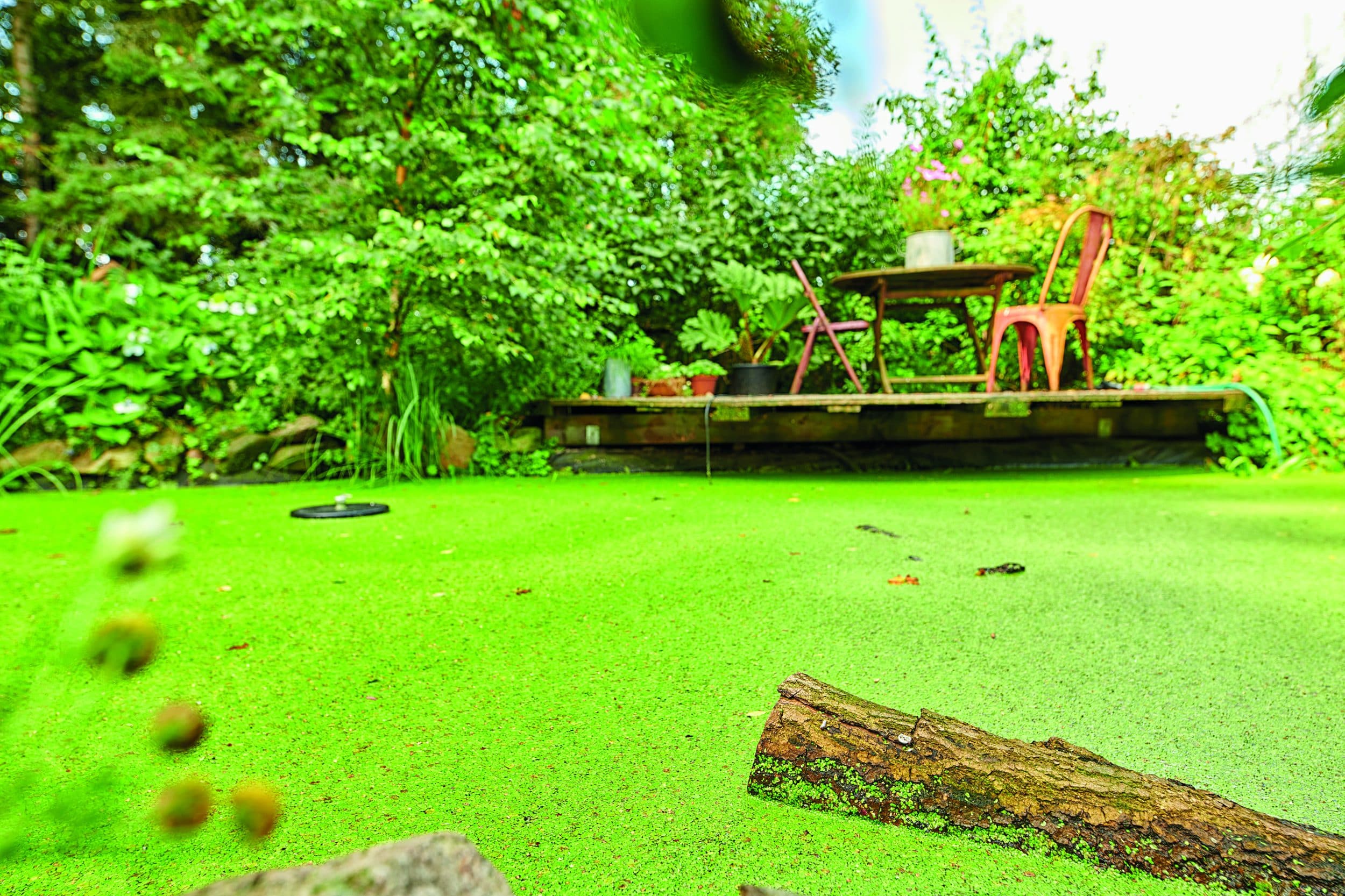
Duck weed is technically a plant but behaves like algae. It forms tiny floating leaves that multiply rapidly, and can be impossible to remove by netting alone. Duck weed thrives in stagnant, still, and nutrient-rich pond water.
The key to preventing nuisance algae is to deprive them of nutrients. This can be achieved by using a combination of methods such as cleaning your pond, installing a pond filter, and having plenty of pond plants.
Most ponds benefit from being cleaned annually. The best way to do this is by draining down your pond with a dirty water pump, and carefully netting fish and wildlife and placing them in a tub of water while you do your cleaning.
By draining down your pond, you can remove all the solid waste from the bottom including silt, sludge, and debris. You also do a complete water change in the process removing dissolved organic matter. You can use normal tap water to fill up your pond again – it is perfectly safe for fish and wildlife. The chlorine diffuses into the air within 24 hours and is just a mild disinfectant.
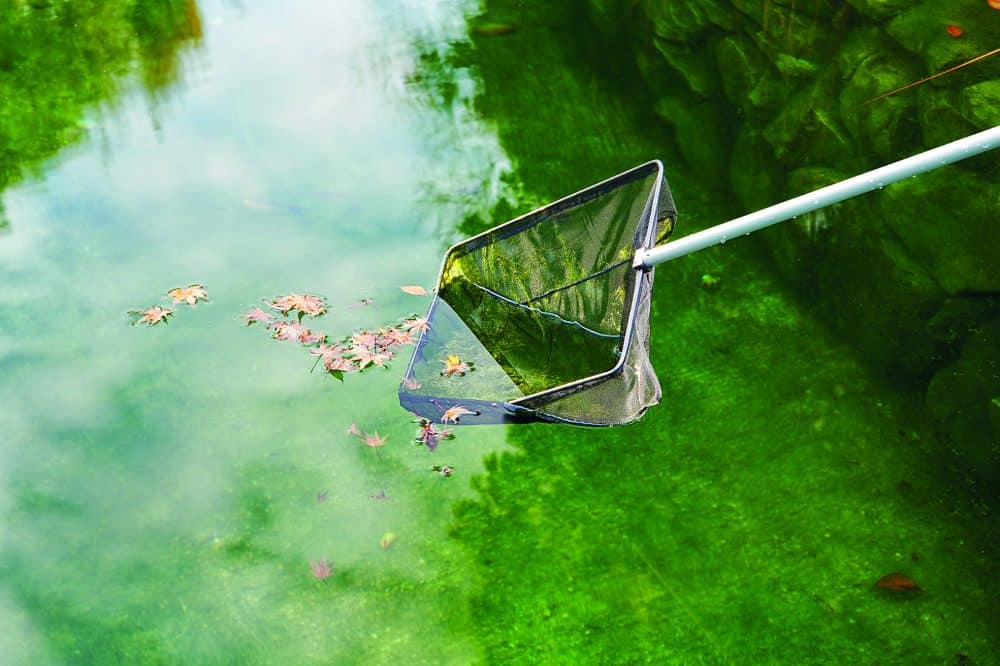
If you have a large pond where draining it down is impractical, or a wildlife pond that you would rather not disturb too much, you can alternatively remove solid waste with a sturdy net or a pond vac. Nets are good for removing leaves and larger debris. Pond vacs are great for targeting waste anywhere in your pond, and are extremely good for sucking up silt and smaller particles of solid waste.
Having a good pond cleaning regime is essential for staying on top of pond waste. This helps reduce nutrient levels and keeps nuisance algae under control.
The primary function of most pond filters is to break down toxic waste and render it harmless to fish and wildlife. This ‘biological filtration’ is performed by bacteria that live on filter media. Ironically, this process renders waste down into organic molecules such as nitrates that can encourage algal blooms. Despite this, pond filters are essential for maintaining good water quality.
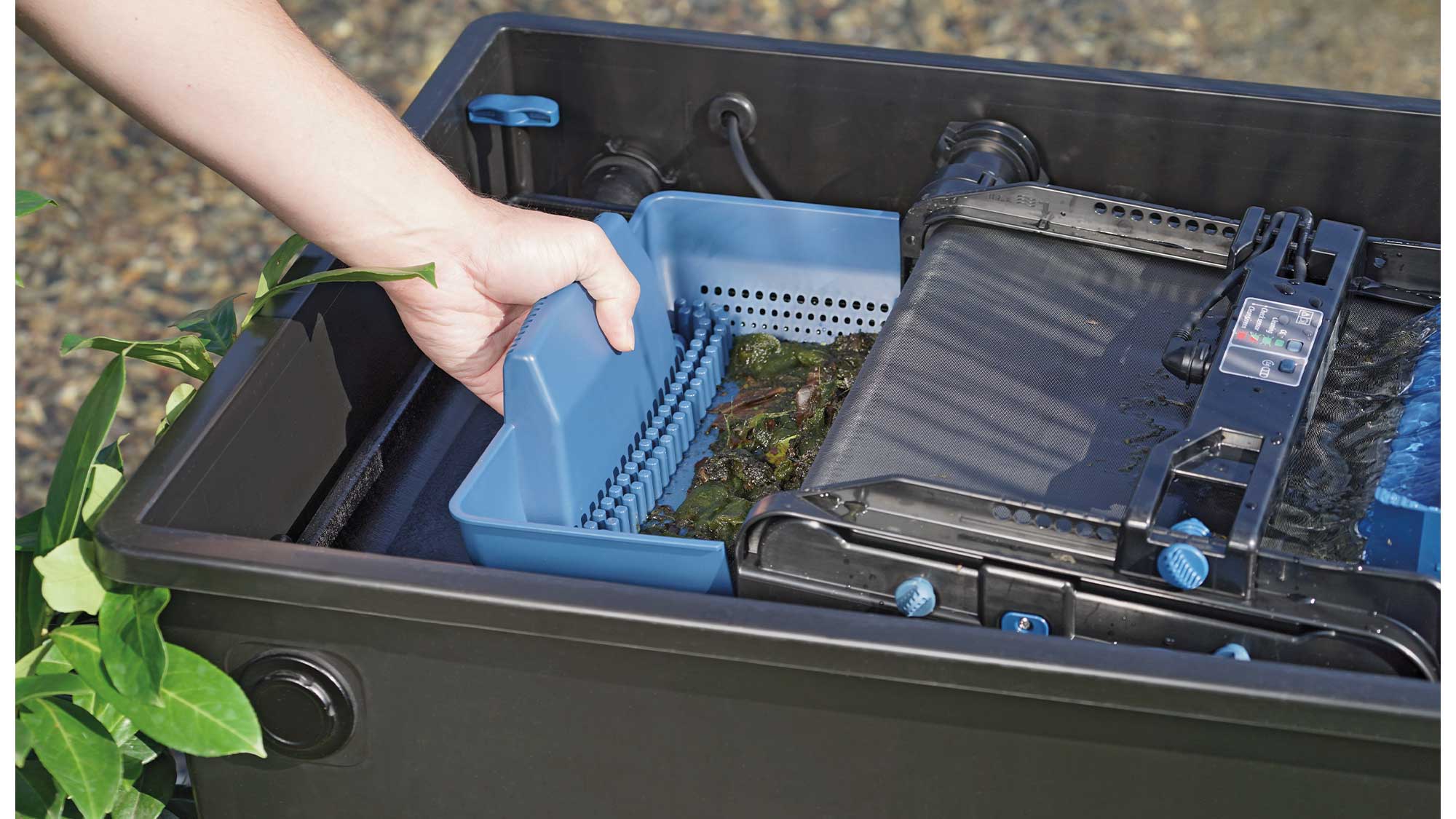
In additional to performing biological filtration, pond filters very importantly also harvest solid waste. This constant removal of silt and debris from your pond helps to keep nutrient levels down. To maximize solid waste removal, it is important to clean your filters regularly to purge solid waste.
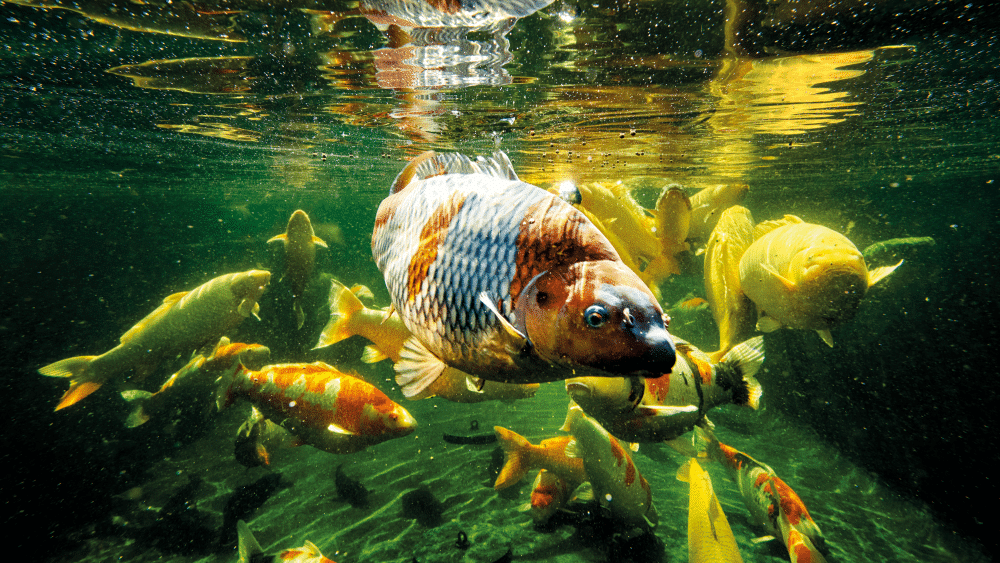
Larger fish such as koi carp need more feed. Introducing fish food to your pond an cause nutrient levels to accumulate and cause algal blooms. Koi ponds should therefore have pond filters that are not only efficient biological filters, but also extremely good at harvesting solid waste. Drum filters and Nexus filters are the very best at this.
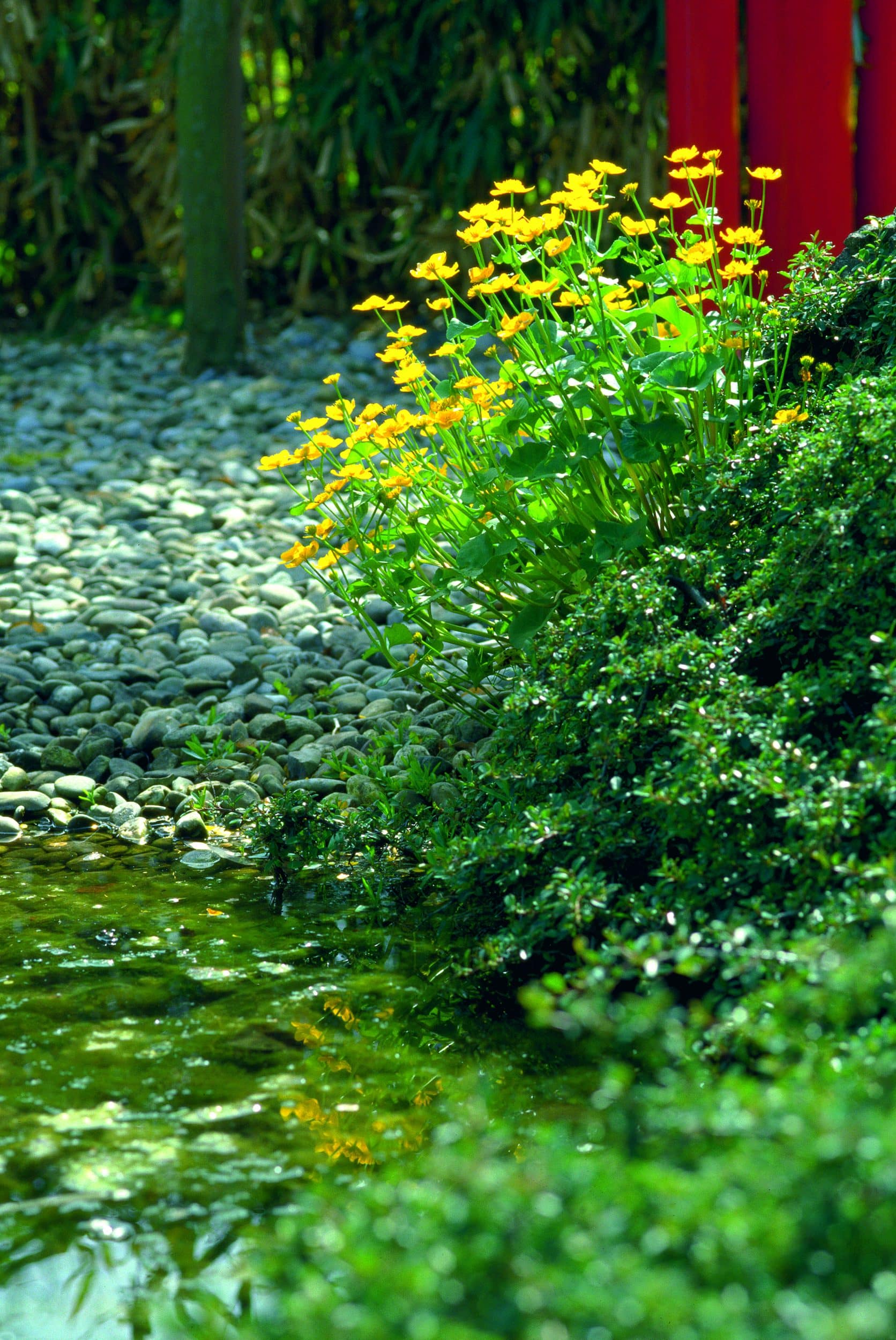
Pond plants are your secret weapon when it comes to preventing nuisance pond algae. They are extremely efficient at sucking up free nutrients in your pond, and are capable of out-competing nuisance algae completely.
If you have plenty of pond plants and good sunlight, you have the perfect recipe to keep nuisance algae at bay – permanently. The are hands down, the easiest and most effective way to prevent nuisance algae.
There are several different types:
A key contributor to high nutrient levels in fish ponds is the feed you give them. Fish food eaten by your fish creates waste, as does any uneaten food. This waste is broken down by bacteria releasing the nutrients inside which promotes algal blooms.
If you feed your fish regularly, be sure to only feed them what they need. This will avoid uneaten food breaking down in your pond. It is a good idea to adopt the ‘five minute rule’. If your fish don’t eat all of the food you introduce in 5 minutes, do not feed them any more.
If your fish are smaller species such as goldfish, you may not need to feed your fish very often – or at all. If you have plenty of pond plants there will be lots of natural food available to them in the form of invertebrates, and they also eat algae. The best way to stay on top of nuisance algae in goldfish ponds is to have plenty of pond plants, a good pond filter, and feed sparingly.
Although the principles of preventing nuisance pond algae apply to all algae, some methods are more effective at dealing with specific types:
Green water
Green water is easy to deal with. All you need is a pond filter with a suitably sized UV clarifier. UV light kills unicellular algae that cause green water. Remember to change your UV bulbs once a year.
Blanket weed
Dealing with blanket weed in the short term means removing what your can with a net, and using a blanket weed treatment to kill it off. But to prevent it returning longer term, you will need to introduce more pond plants and/or a good filter system.
Duckweed
Duckweed only grows in stagnant, still ponds – usually in woodland where there isn’t enough sunlight for other pond plants to grow. The best way to deal with duck weed is regular pond cleaning to remove solid waste, and the introduction of moving water with a fountain or waterfall. You should also introduce more pond plants and ensure they have plenty of sunlight.
Algae will always be part of pond life — but it doesn’t have to take over. If you can manage pond waste and nutrient levels, you deprive nuisance algae of the conditions they need to grow.
The tips in this guide will help you to maintain a pond that is not only great for fish and wildlife, but free of nuisance algae all year around.
If you’re looking to transform your garden, pond, or outdoor feature after dark, the Oase LunAqua Connect system is one...
Read MoreAs the days brighten and water temperatures slowly climb, your pond begins to wake up and so do your fish....
Read MoreSpring is the season when your pond wakes up again. Plants start growing, wildlife becomes active, and the water begins...
Read MoreWhen choosing a pond liner there are two simple things to consider: the size of liner you need and the...
Read MoreFor seasonal pond advice direct from an expert!