01253 209999

Choosing the Flow Rate for your Pond Pump

When choosing the flow rate for your pond pump there are several things to consider. Whether your pump is supplying water to a pond filter, waterfall or water feature, there will be an optimum flow rate you should be aiming for.

Let’s take a look at what we mean by pond pump ‘flow rates’, and how we work out the flow rate we need.

What are pond pump flow rates?

The flow rate of a pond pump is the amount of water it can move over time. This is typically measured in litres per hour. So for example, if a pump can move 5,000 litres of water over in one hour, we say that this pump has a ‘flow rate’ of 5,000 litres per hour.

How to work out the flow rate needed for a pond pump?

When choosing a pond pump it is important to work out the flow rate you need. Pond equipment such as pond filters, usually have specific flow rate requirements supplied by the manufacturer. In this case it is usually straight forward to match the flow rate of the pump to the filter. 

However when choosing a pump for a custom built waterfall or water feature, an estimation of the required flow rate will need to be made. If you need some help working out the flow rate you need why not get in touch for some expert guidance.

Flow rates for filter pumps

Pond filters have specific flow rate requirements. Manufacturers typically state required flow rates for their products. These may be given as an optimum flow rate, maximum flow rate, or a range from a minimum to a maximum flow rate.

It is vital that you choose a filter pump with the correct flow rate. An underfed or overfed pond filter will under perform. And an overfed pond filter may overflow or leak.

Where a maximum or optimum flow rate is available for the pond filter, try to choose a pond pump as close to this as possible without exceeding it. So for example, if a pond filter has a minimum flow rate requirement of 10,000 litres per hour and a maximum flow rate requirement of 15,000 litres per hour, try to choose a filter pump with a flow rate of 15,000 litres per hour or as close to this as you can without going over.

We make it easy for you by recommending the correct filter pump when choosing a new pond filter

Filter and watercourse pumps with controllable flow rates

Some pond pumps give you the ability to control their flow rates using a bankside control panel or via an app on your mobile phone, tablet, laptop or pc.

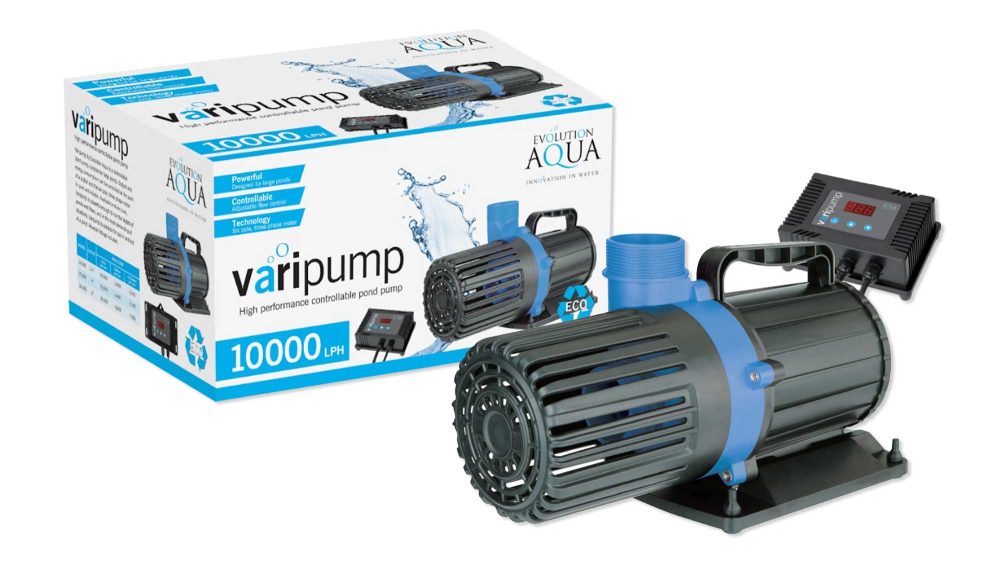
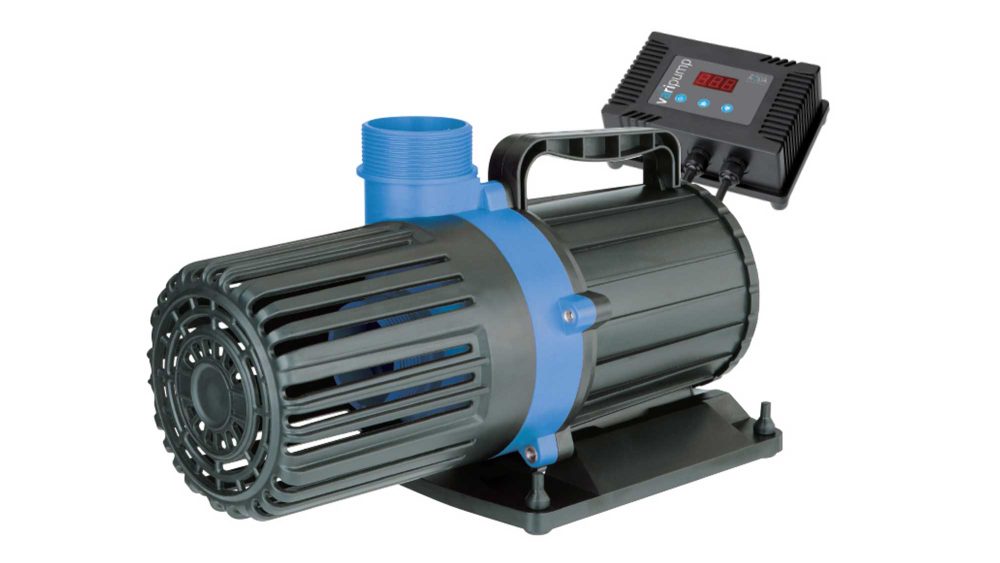
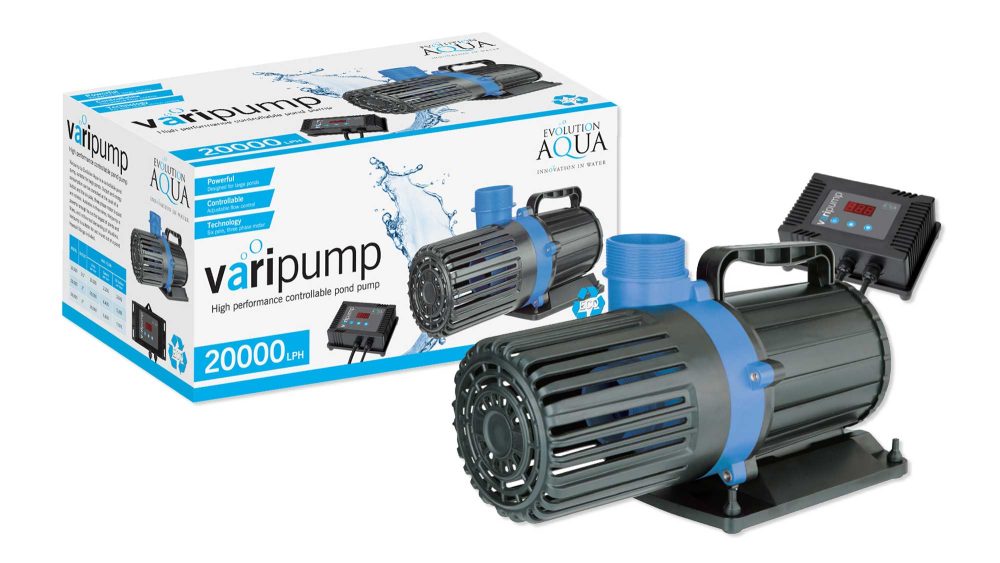
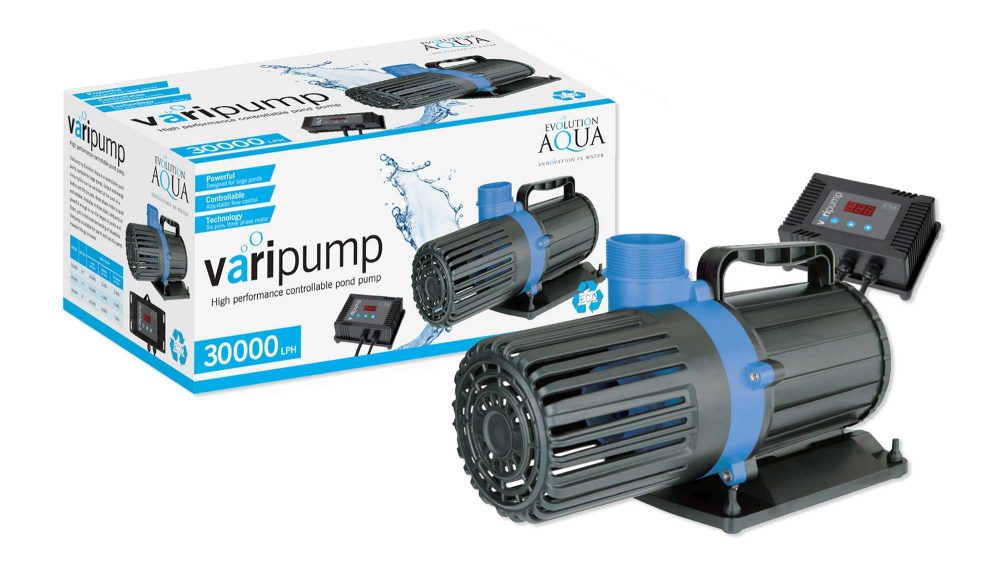
The Evolution Aqua Varipumps have a bankside control panel. Using the the buttons, you can change the flow rate on the LED screen. This allows you to play with the flow rate to get it just right for your waterfall or water feature.

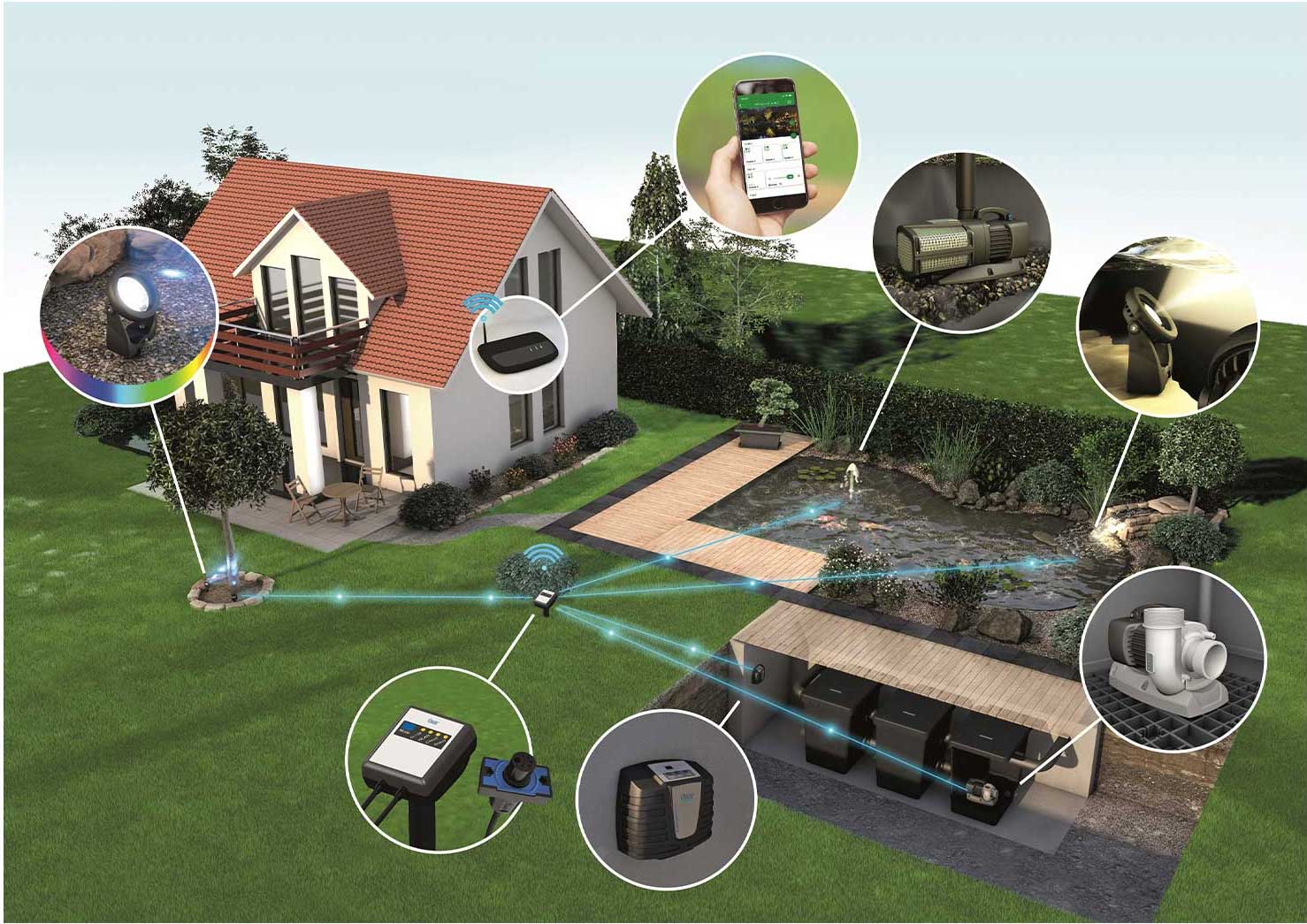
The flow rate of many of Oase’s pond pumps can also changed via mobile app using an Oase Cloud Control, which is connected to your pump via connection cables.

Working out the required flow rate for a waterfall

Working out the flow rate you need for a waterfall can be complicated. Before looking at pumps, you need to establish the actual flow rate needed for your particular waterfall. If your waterfall has been built using a specific piece of equipment such as a blade, the manufacturer should provide the flow rate requirements. However, if your waterfall is a custom built feature, you will need to make an educated guess.

Generally speaking, the height of a waterfall makes little difference to the flow rate you need. However if you do increase the head height you will need a more powerful pump to achieve that head height.

The main considerations to calculate the flow rate you need are:

1). The width of the waterfall spillway (the top lip before it cascades downwards).

2). The strength of water effect you are aiming for.

For a gentle flow, a good rule of thumb is to aim for a flow rate of approximately 1,000 litres per hour (L/hr) for every 10 centimeters (cm) of waterfall width. So for example, for a 1m wide waterfall you would need a flow rate of around 10,000 L/hr. To achieve a  stronger flow you would need to increase this base flow rate accordingly:

  • gentle flow = 1,000 litres / 10cm water width
  • moderate flow = multiply flow rate by a further 50%
  • strong flow = double the flow rate
  • extremely strong flow = triple the flow rate

Although this is a useful guide, it is still a very rough estimate. The perfect flow rate for your waterfall can vary a great deal based upon the intricacies of its shape and design. We therefore strongly recommend getting in touch for expert advice to help estimate the flow rate for your waterfall, so that you can choose the correct pump.

Choosing a waterfall pump

Having estimated the flow rate you need for your waterfall, you can select a suitable waterfall pump. All models usually have a maximum flow rate associated with them. However when it comes to waterfalls, maximum flow rates can be misleading. This is because they don’t factor in the ‘head height’ your pump needs to work with.

Head height is the vertical distance a pump must move water to its destination. For more detailed explanation we recommend reading our pond pump head height guide.

When pond pumps lift water they encounter resistance. The greater the height they have to pump water to the top of your waterfall, the more resistance they encounter. This distance is known as the ‘head height’.

Flow rate performance loss with increased head height varies acccording to the pump model. Filter pumps are a good option for  waterfalls with a small head height. This is because they are cheap to run. However they lose flow rate performance quickly with increased head height. For bigger head heights (>2m or so), you may want to consider opting for a pond pump specially designed for the task of lifting water. Oase’s Aquarius range of pond pumps are perfectly suited to this role:

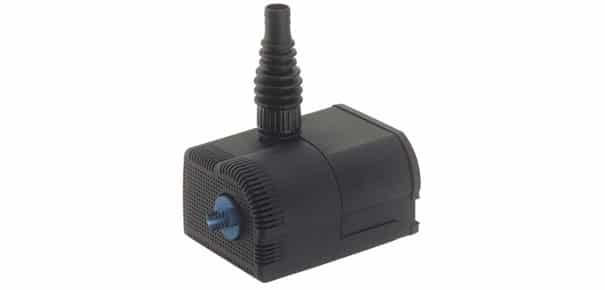
Aquarius Universal Classic
Aquarius Universal Classic - Ideal for small waterfalls and water features
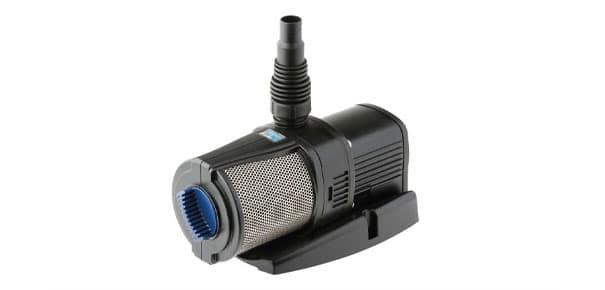
Aquarius Universal Premium
Aquarius Universal Premium - Ideal for waterfalls and water features
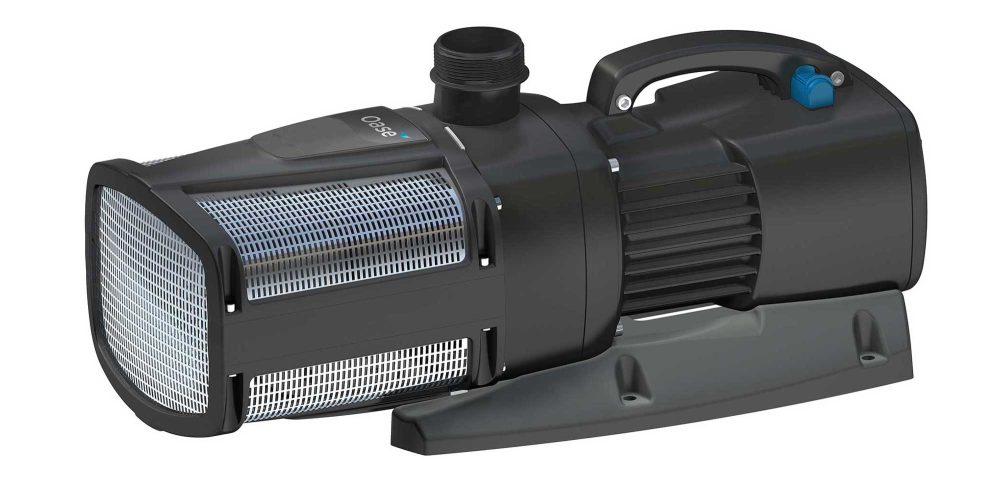
Aquarius Eco Expert
Aquarius Eco Expert - Ideal for large waterfalls and water features
Flow rates for feature pumps

There are a wide variety of water features found in ponds. They take many forms, from small statues spouting water, to drilled ornamental rocks with bubbling water effects, to grand multi-tiered fountains. The creative options are endless. Working out the flow rate needed for a particular water feature can be quite a challenge as there is rarely a ‘one-size fits all’ approach.

Off the shelf water features, and particularly standalone water features (that are unconnected to a pond) often have manufacturers flow rate requirements. It is therefore usually quite easy to choose the pump you need. But for water features where there is no flow rate information available, you will need to make an educated guess.

There will be several things to consider such as the plumbing diameter, aperture restrictions, head height and the desired water effect. Unless you have experience with water features, we would recommend getting in touch for expert advice on choosing the right pump for the job.

Waterfall and water feature pumps with controllable flow rate

The flow rate of Oase’s Aquarius waterfall and water feature pumps may be controlled electronically.

The flow rate of Aquarius Universal Premium pumps (5000-12000 models only) can be controlled via connection to the dimmable socket of an InScenio FM Master 3 garden controller.

The flow rate of Aquamax Eco premium and Aquarius Eco Expert pumps can be controlled via connection to an Oase Control Cloud or InScenio FM Master Cloud garden controller. The Oase Control (OC) system allows remote control of flow rate via mobile app. Flow rate can also be controlled over 24 hours via a fully pre-programmable timer.

Oase’s fantastic OC system allows connection of up to 10 EGC compatible items of pond equipment from pumps to pond lighting.

Ose Easy Garden Controller

'Oase Control' (OC) System

.

InScenio FM Master 3
The InScenio FM Master 3 provides handheld remote control of 4 items of pond equipment with an 80m range.
InScenio FM Master Cloud
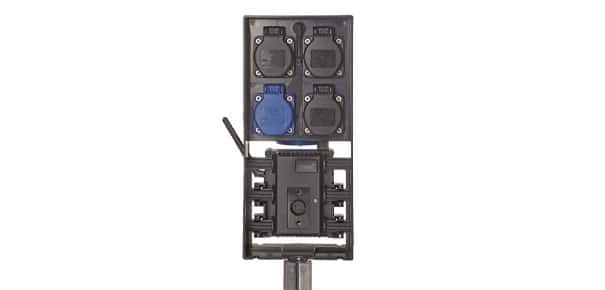
InScenio FM Master Cloud garden controller provides app control of 10 compatible pumps, filters and lights, and 4 power sockets.

Smaller diameter plumbing reduces the flow rate of pond pumps

Small diameter plumbing connected to your pond pump can adversely affect flow rate performance. Smaller diameter plumbing reduces flow rates due to friction loss. Friction loss is caused by anything that causes flow restrictions. It is therefore important to minimize friction loss all the way along your plumbing, from your pump to the point of outflow.

It is good practice to connect your pond pump via the maxiumum possible hose or pipework diameter. So for example, if the largest available outlet connection for your pump is 38mm (or 1.5″), then be sure to connect the pump via 38mm suction hose or pipework.

Pipework fittings and bends also contribute to reduced flow rate. The more of these you incorporate and the tighter the bends are, the worse this gets. For this reason, using a single length of suction hose is preferable to using solvent weld pipe with multiple bends and connections. But if you do need to use solvent weld pipe, then be sure to minimise the number of connections and use the widest angle bends possible.