In order to choose a pond filter that is right for your pond, you need to take into account your pond volume and any fish stocks. The more fish you have and the larger they are, the bigger your filter system needs to be.
Pond filters are able to process a limited amount of pond water. It is important to choose a pond filter scaled to the volume of water in your pond.
To calculate the volume of your pond, multiply the length, width and depth together.
For round or irregular-shaped ponds this can be a bit tricky. A good tip is to divide the pond into sections and calculate them individually.
In addition to the total volume of water in your pond we also need to work out how much waste your pond is likely to generate. Wildlife ponds without fish tend to produce the least waste. Fish ponds however create more waste due to the fact we add organic matter to the system in the form of fish food. The fish food and the resultant toxic fish waste must be broken down by our pond filters.
The amount of extra waste produced very much depends on the number and size of your fish. The more you have and the larger they are, the more waste is produced. If you are buying small fish that will grow you should choose a filter system that will cater for them when they reach their mature size.
As a rule of thumb, pond filters need to process twice as much waste (per water volume) if you have smaller fish such as goldfish, and four times as much if you have larger fish such as koi carp.
Once you know the volume of your pond and your fish stocks, you are ready to choose a pond filter. All our pond filters have maxmum pond volumes they can cater for according to whether you have a wildlife pond (with no fish), a goldfish pond, or a koi pond. You can now begin to look at the ‘type’ of pond filter that suits your pond best:

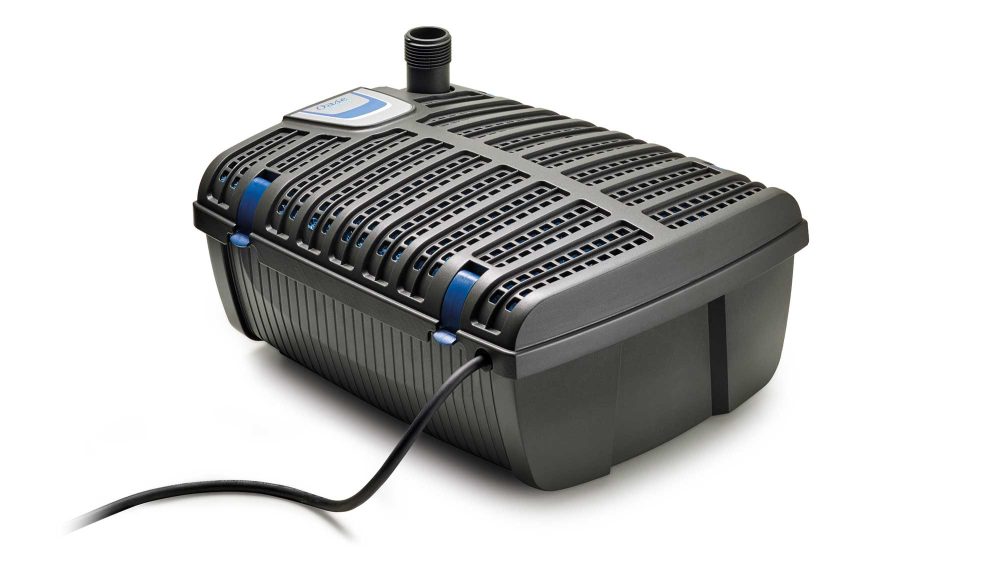
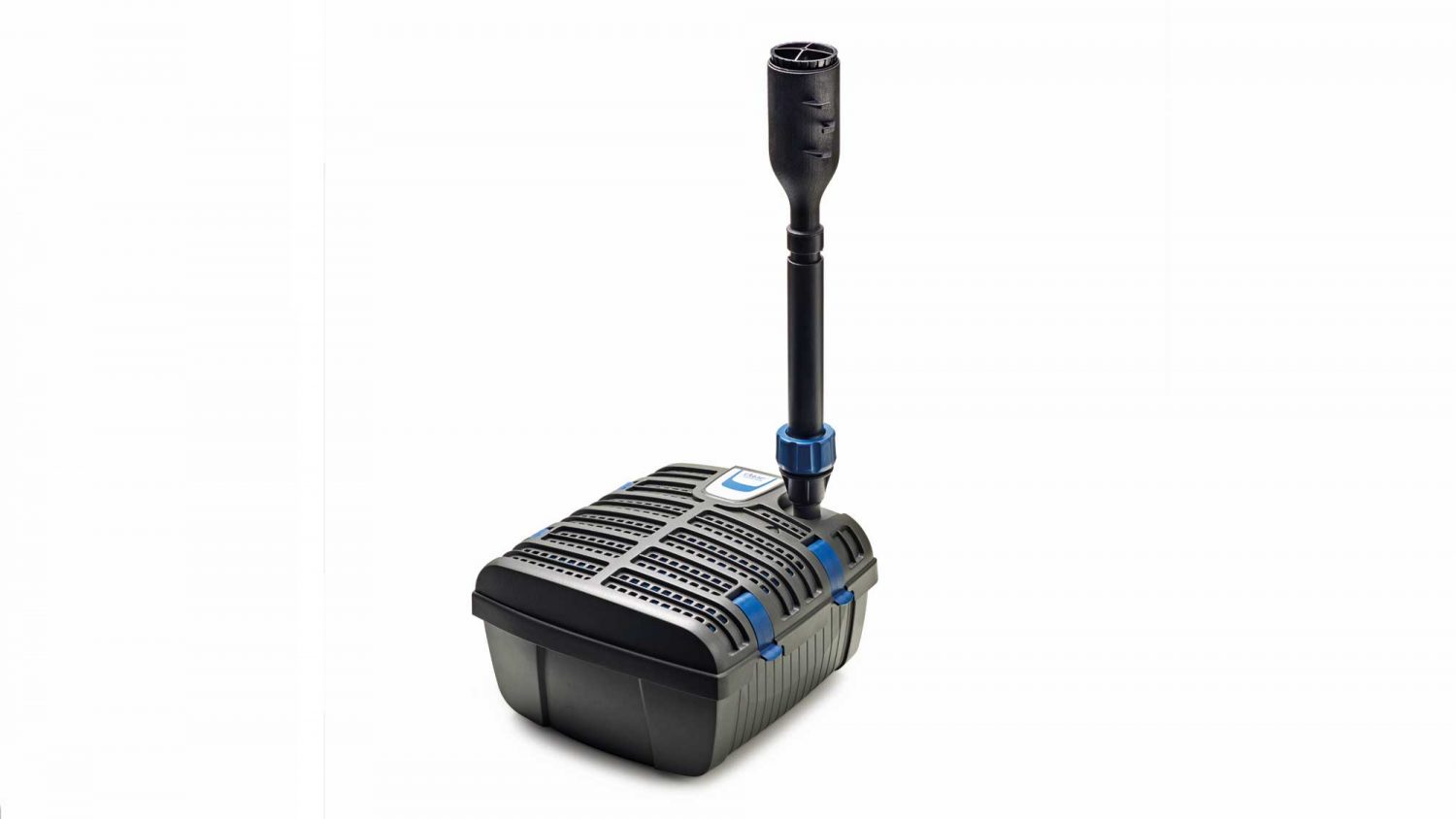
Pond pumps with integrated UVs and filters that are submerged into your pond. They are suitable for small ponds and water features.
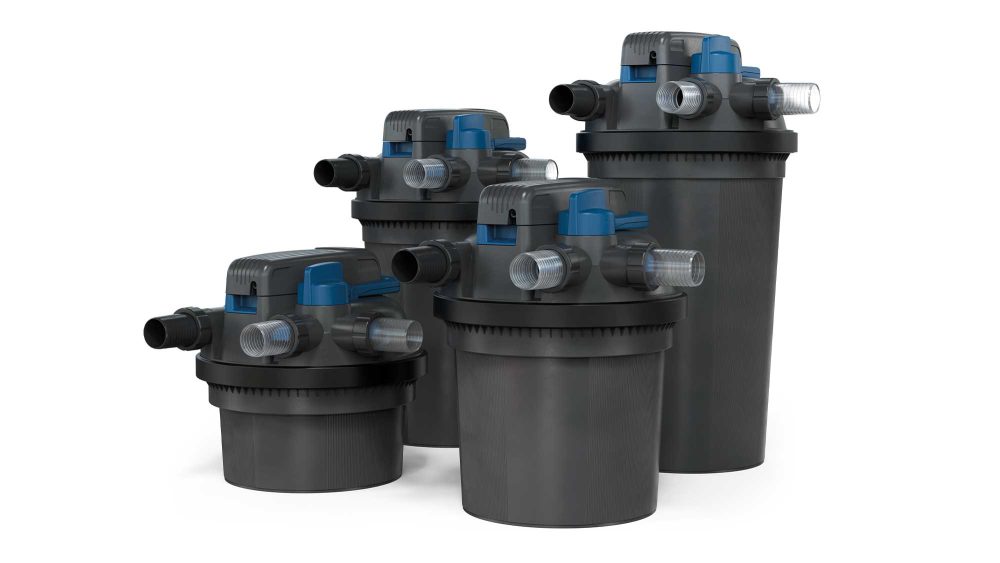
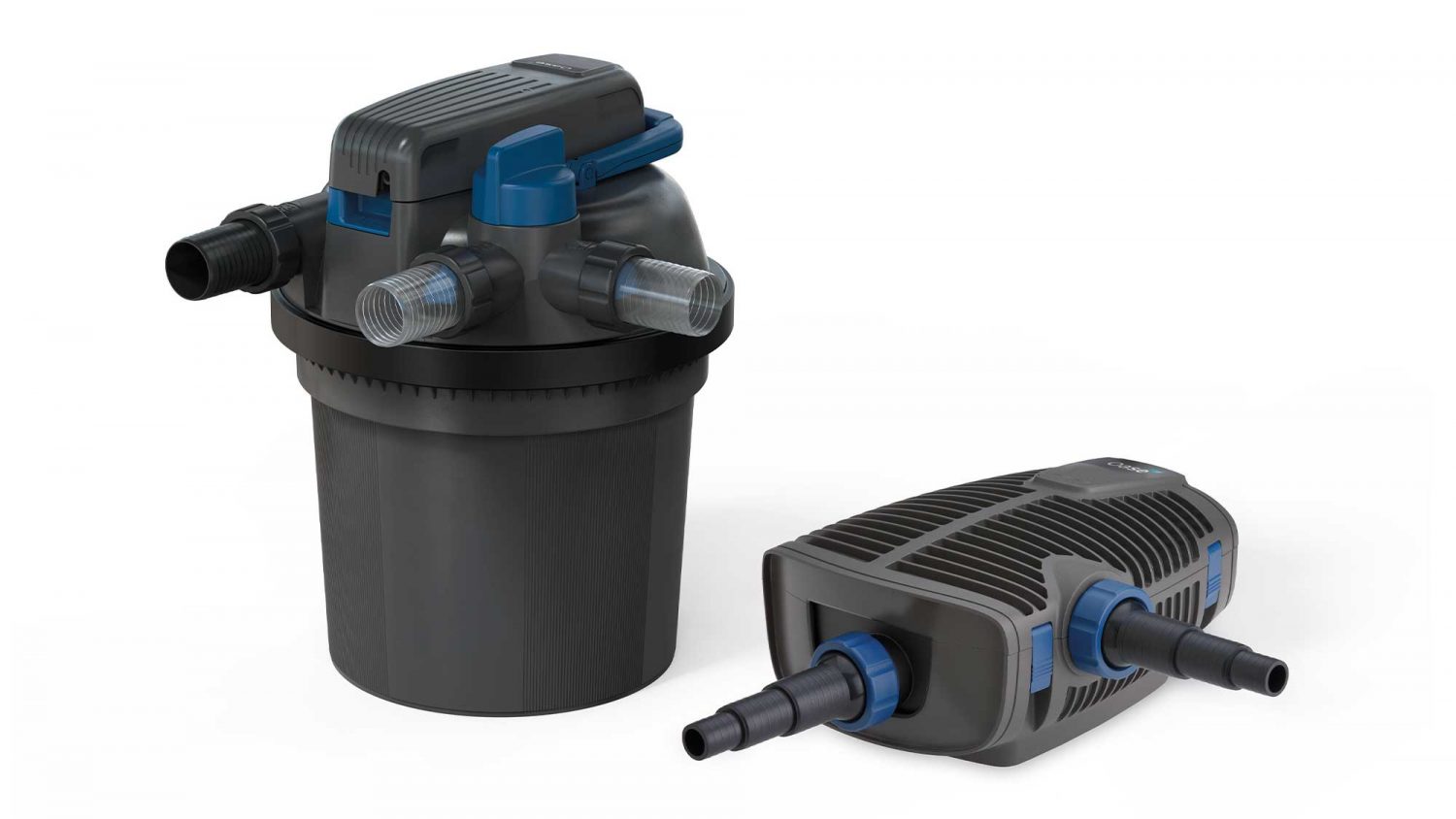
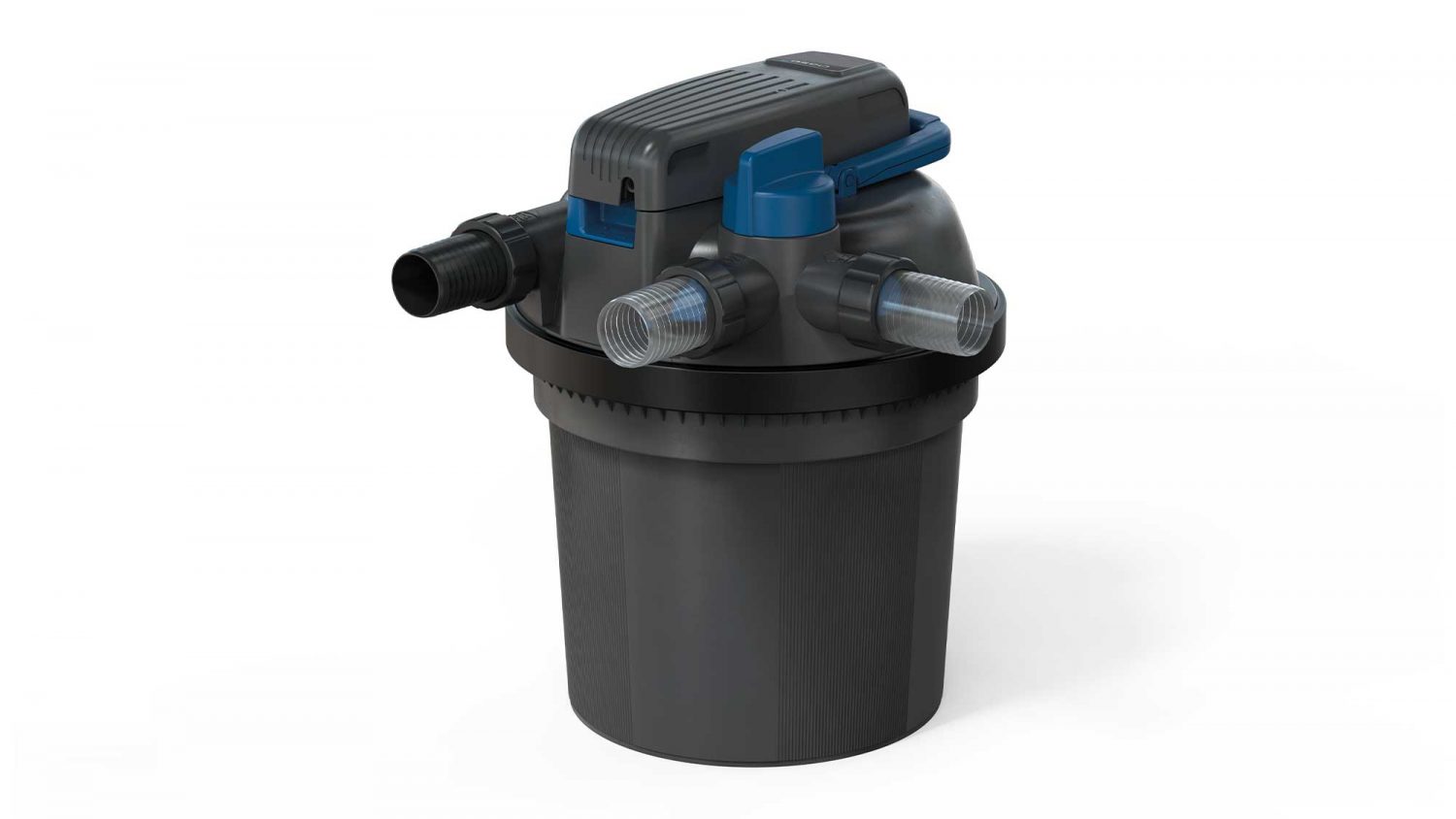
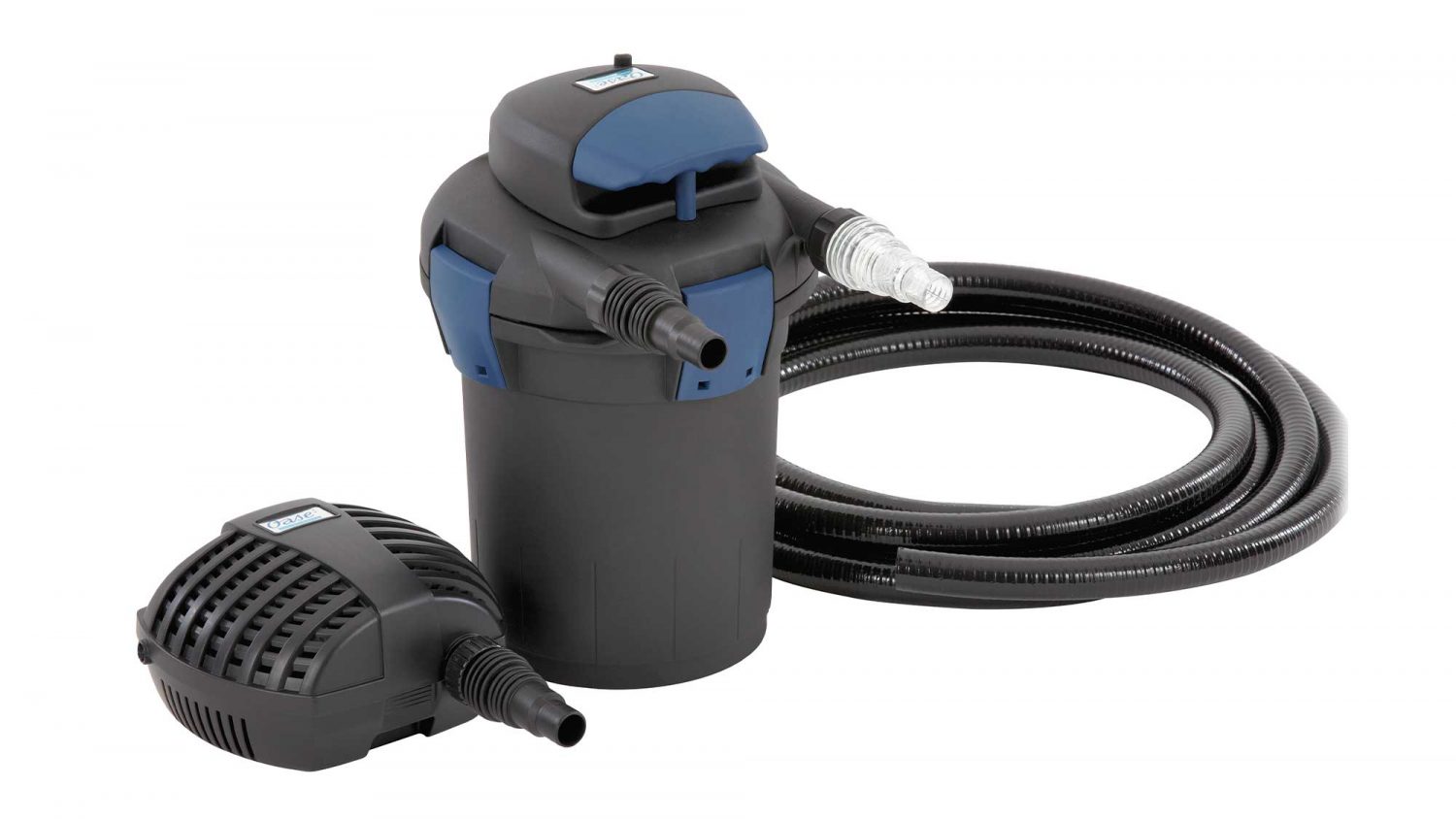
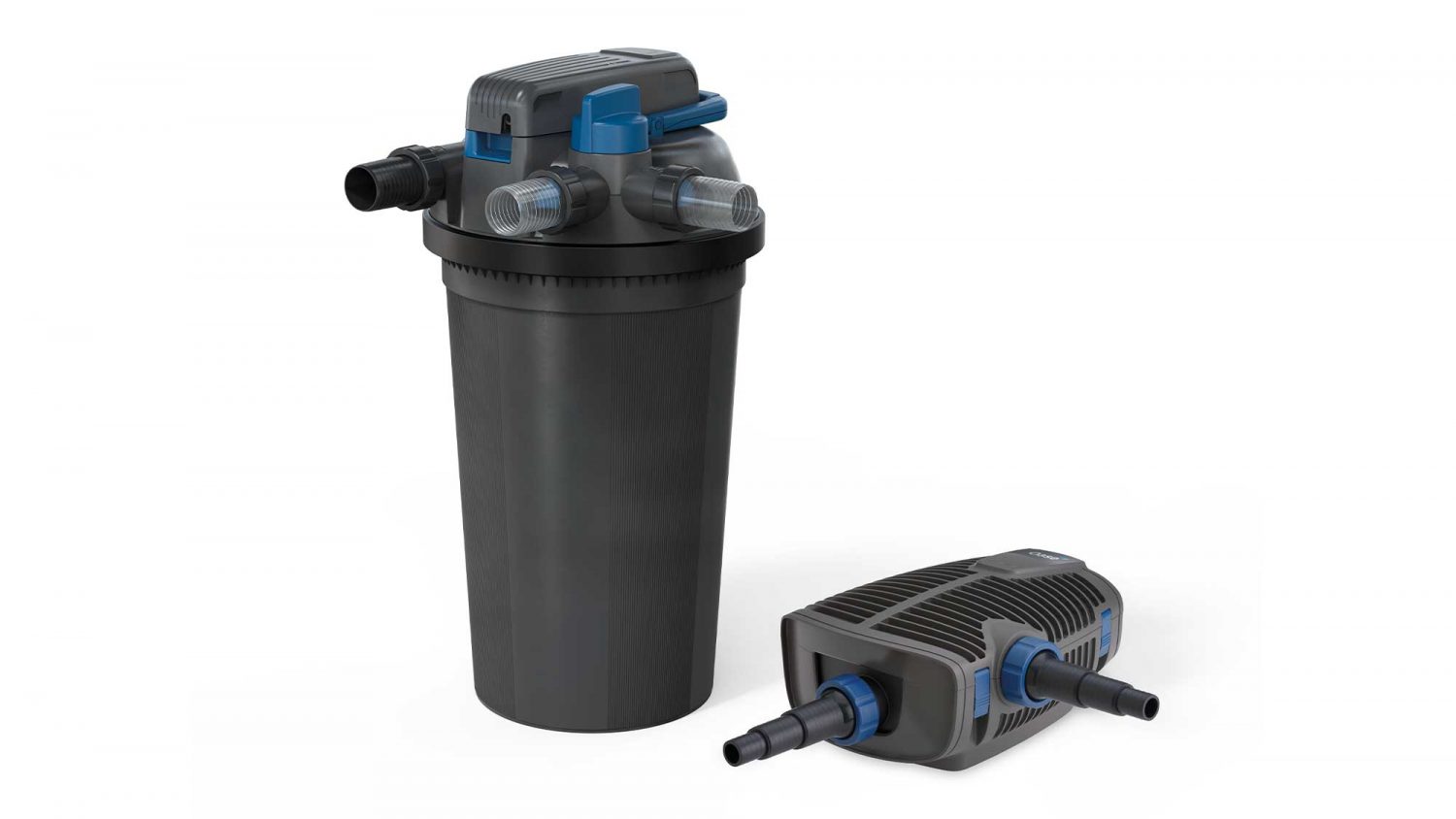
Pressure filters can be positioned at any height above or below the level of your pond. They can be partially buried in the ground to help hide them. They have integrated UVs and are connected to a filter pump to supply them with pond water. They are suitable for small to medium sized ponds.

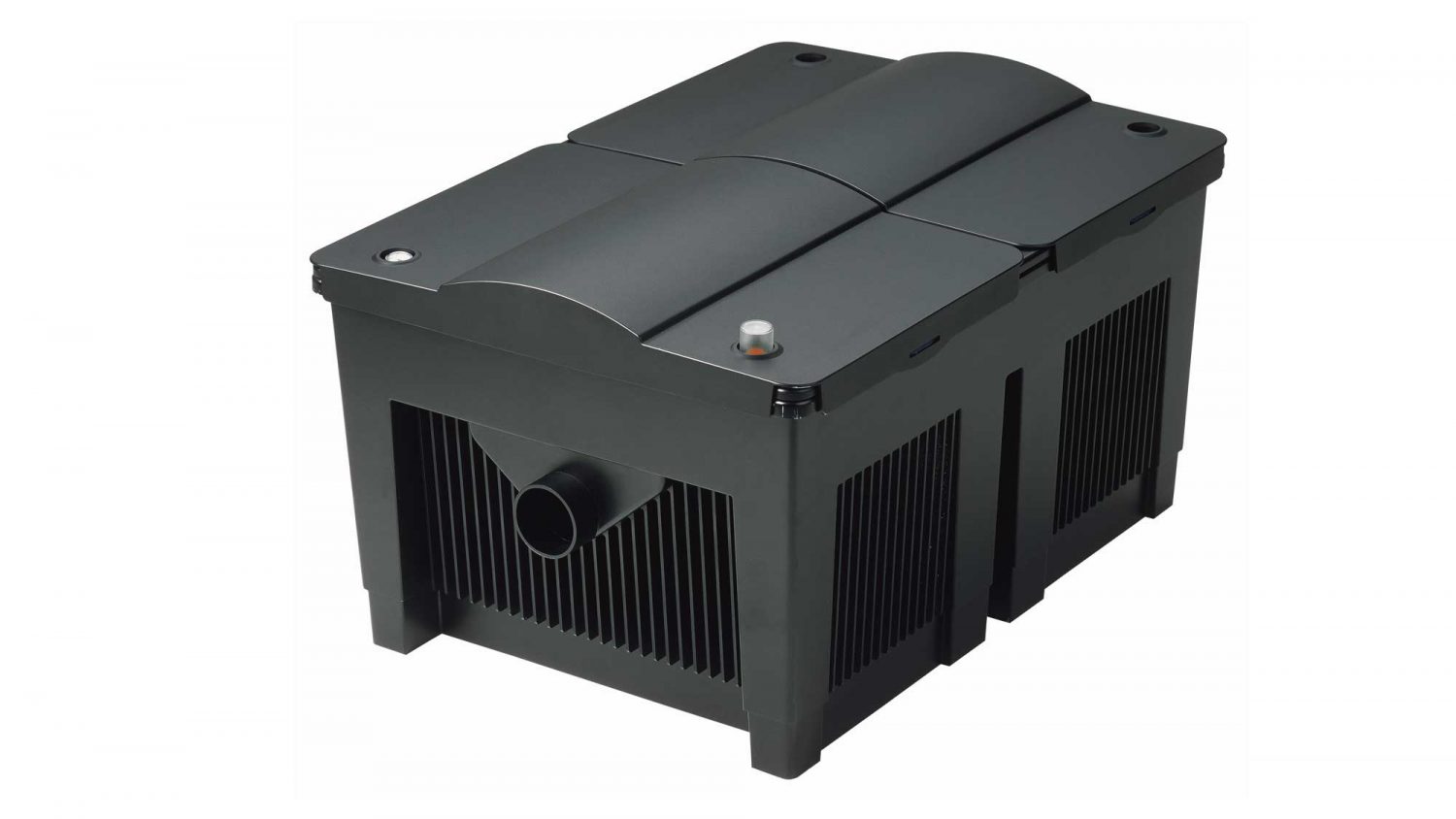
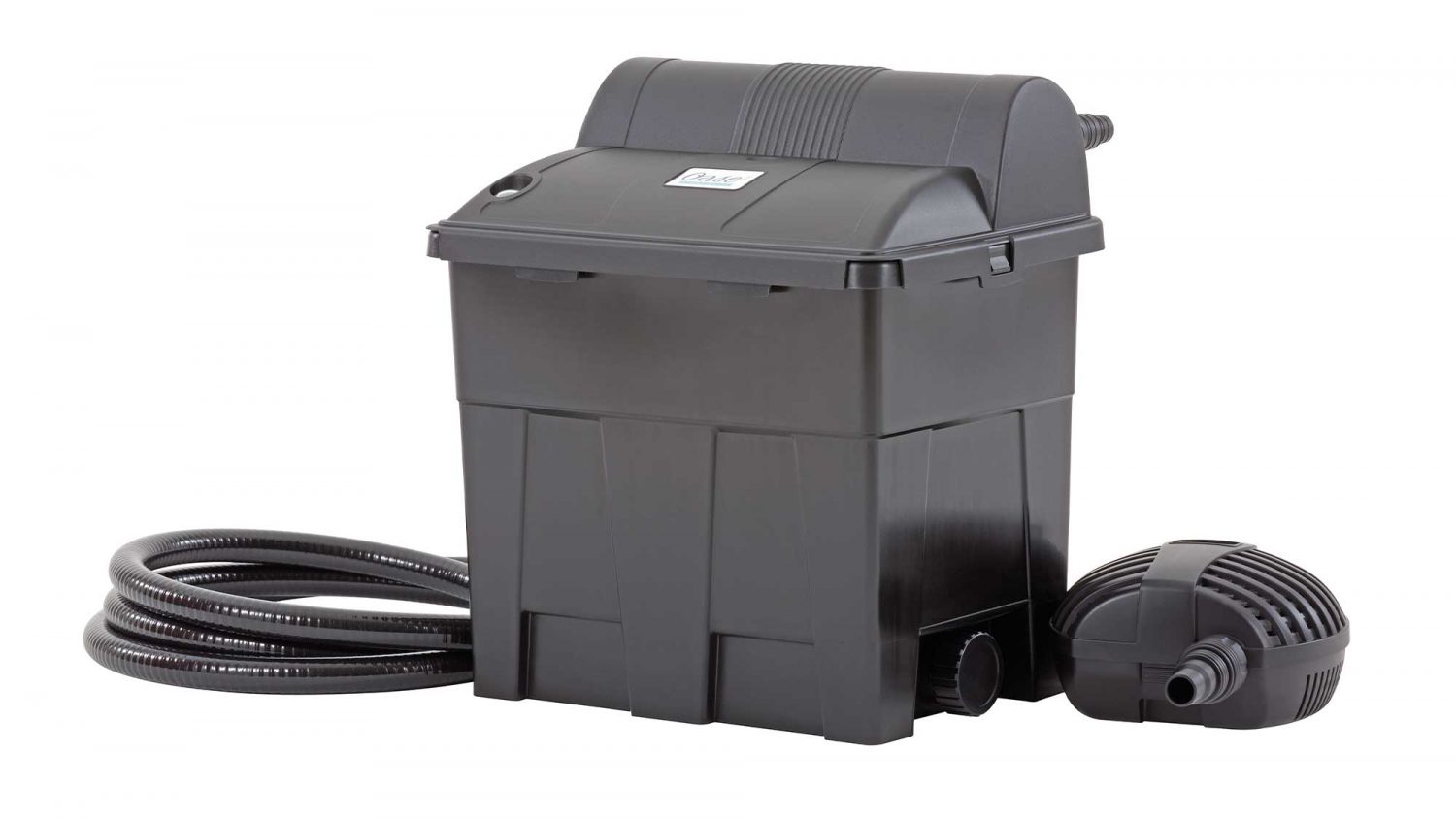
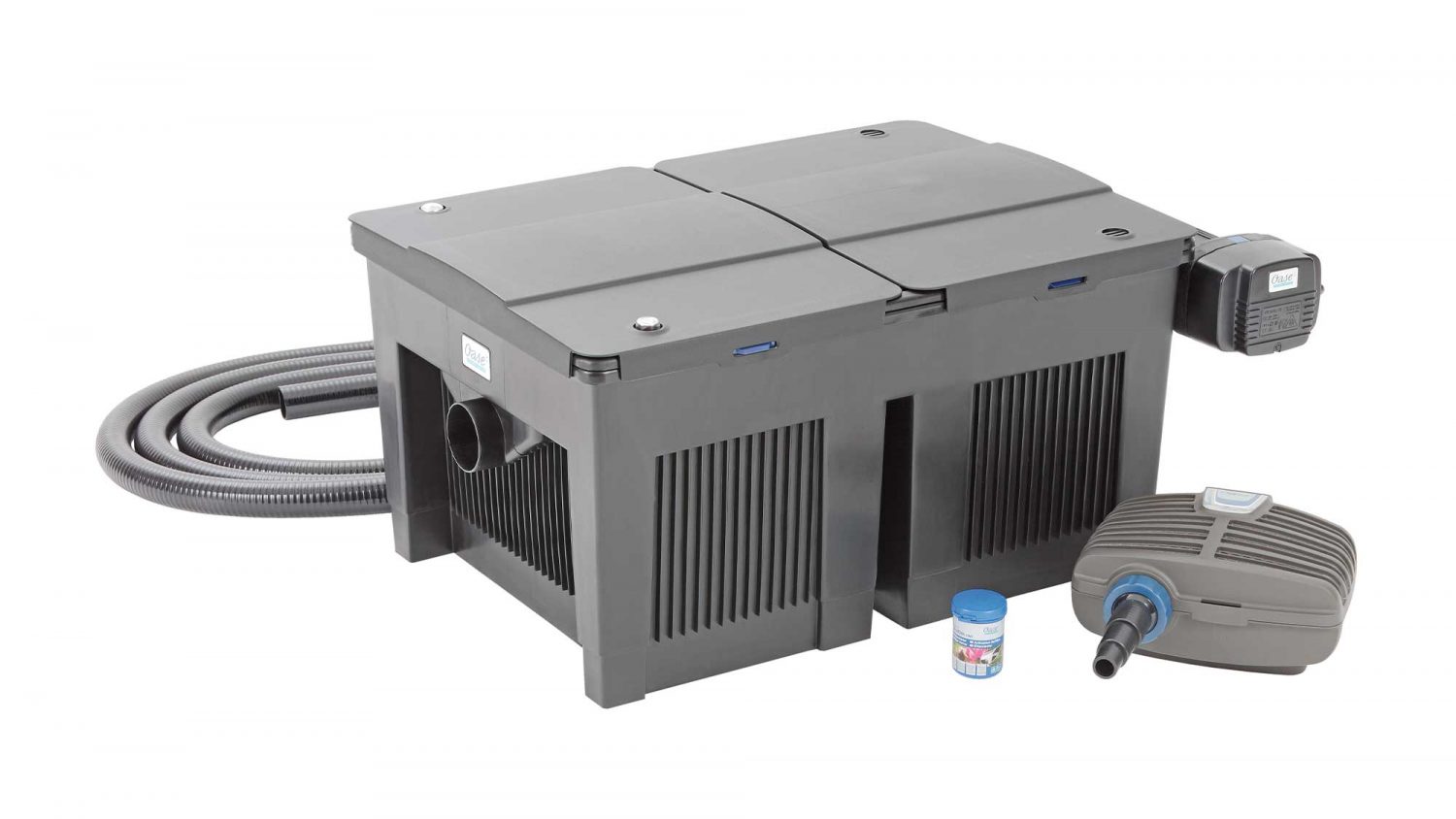
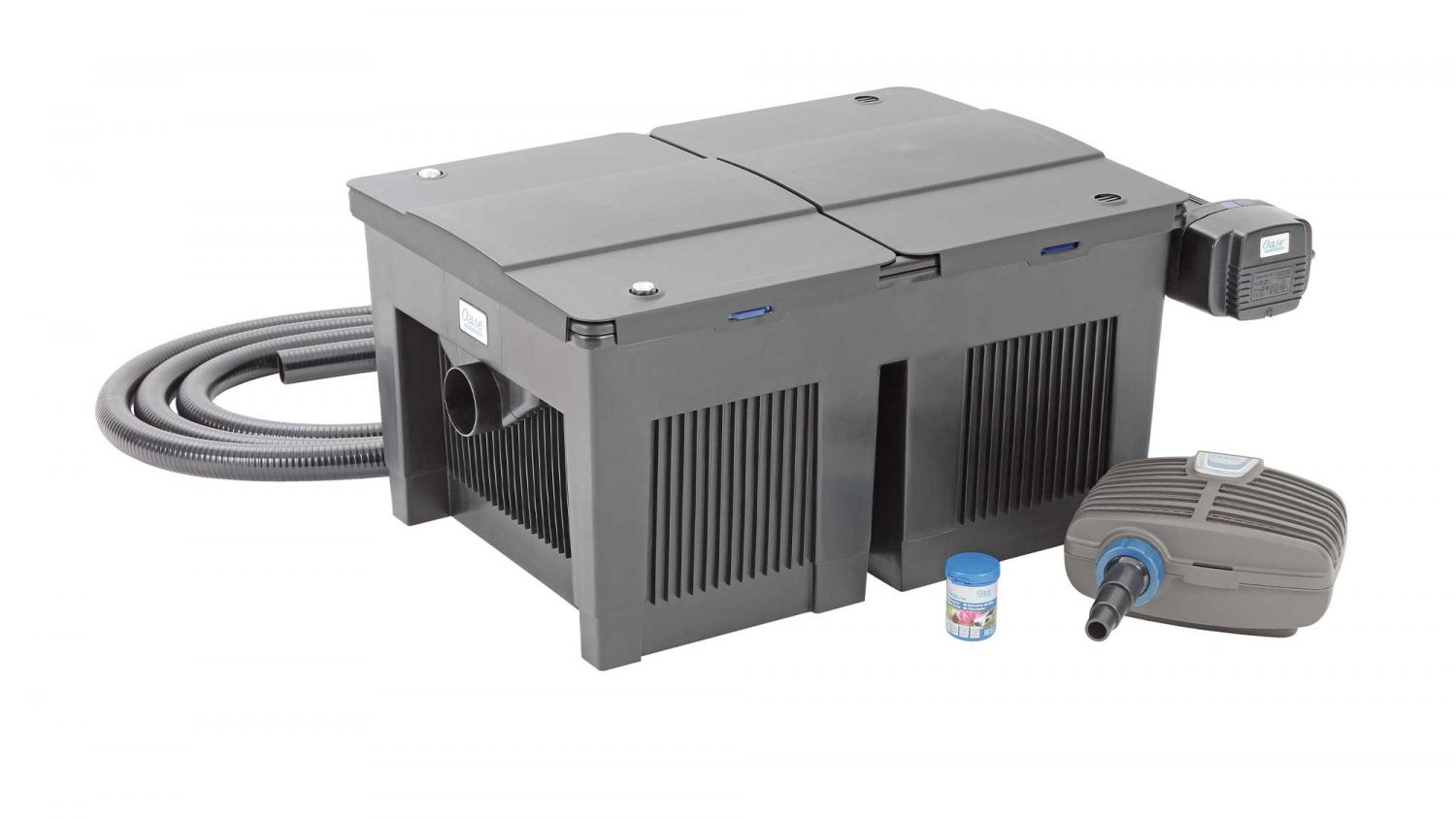
Flow through filters or 'box filters' are a tradition and very effective pond filter. The filter media they house is accessed by lifting the lid. This makes maintenance and cleaning tasks much easier. Flow through filters should be positioned above pond level so they can return filtered water by gravity. They are suitable for most pond sizes.
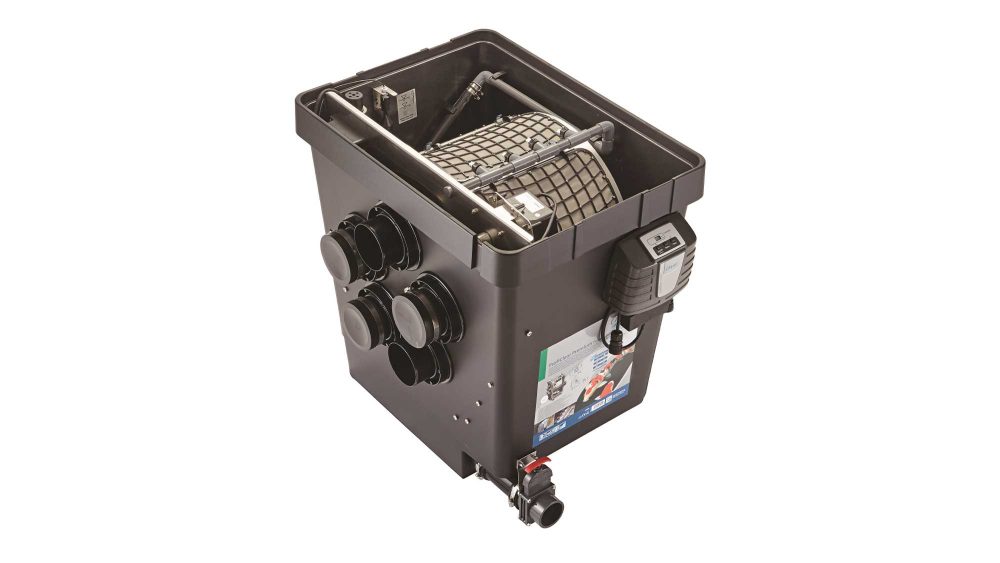
Drum filters are the very best mechnical filters available. They remove all solid particles larger than a human hair using automated cleaning cycles. They are very easy to maintain and represent the very best in pond filtration solutions. They are recommended for larger goldfish ponds, koi ponds, and swim ponds. They come combined with a moving bed filter in one unit, or are connected to moving bed modules. These break down dissolved organic waste.
Best Selling Filtration Products
For seasonal pond advice direct from an expert!