01253 209999

How to choose the best pond pump for your head height

It is important to choose the best pond pump for your head height. When pumping water uphill, pond pumps lose performance. The flow rate they deliver can drop off significantly with increased head height.

It is therefore important to measure the head height your new pump needs to work with, and check out pump performance graphs when choosing a model.

What is pond pump head height?

Pond pump head height is the vertical distance a pond pump must lift water to its destination. Pumping water uphill, against gravity, reduces the flow rate. The greater the head height, the less water a pump can deliver per hour. It is therefore important to choose your pond pump based upon its flow rate performance for your head height requirements.

How to work out pond pump head height?

When working out the head height for a pump, you may need to make several measurements. The first measurement should be the depth of your pump below the surface of the water. The second measurement should be the height of your outlet from the surface of your pond. Typical outlets could be the connection to a pond filter, the outlet from a water feature, or the outlet into the top of a waterfall. Simply add these two vertical measurements together to get your head height.

Let’s look at a couple of examples:

  1. You need a filter pump to feed water to your pond filter. The pond pump will be positioned on the bottom of your pond from where it will draw water and pipe it up and out of your pond to your filter. The pond is 1m deep, and so your first measurement is 1m. The outlet connection into your pond filter is 500mm or 0.5m above the surface of your pond. You therefore add 1m and 0.5m to give a total head height of 1.5m.
  2. You need a pond pump to feed your waterfall. The pond pump will be located at a depth of 0.8m below the pond surface. The pump is connected to the top of the waterfall by a length of hose. The outlet feeding the top of your waterfall is roughly 1.2m above the surface of your pond. This means you have a total head height of 0.8m plus 1.2m which equals 2m total.

What type of pump do I need for my head height?

Having worked out the head height your pump needs to work with, the next thing to decide is the ‘type’ of pond pump best suited to your needs. There are many types of pond pump, all designed for specific roles.

As their name suggests, filter pumps are ideal for supplying your pond filters with water, but they can be used for other roles. They are best suited to situations where there is not too much head height. Filter pumps tend to be the most energy efficient and cost-effective to run. Since they need to be on all day and every day of the year, low energy consumption is a key aspect of their design. Filter pumps can therefore be a cost-effective choice of pump for waterfalls and streams where there is not too much head height.

For waterfalls or water features with a larger head height, it is better to go for a specialist waterfall and feature pump. These types of pumps are designed specifically for lifting water. While not quite as cost-effective to run, they make up for it with improved performance. The flow rate they deliver is impacted less by head height than standard filter pumps. They are perfect for taller waterfalls, or water features where good water pressure is required to produce the desired display. They are also a good choice for feeding  ponds or pond filters located at significantly higher elevations.

Understanding pond pump performance according to head height

Individual pond pump models usually have a maximum flow rate number tagged onto the end of their name. This number is an indication of their maximum flow rate, in litres of water per hour.

For example, the Oase Aquamax Eco Premium 9000 filter pump has a maximum flow rate of 9,000 litres per hour.

However it is important to realise that maximum flow rates can only be achieved with zero head height. In most situtations you will need to pump water upwards, for example to a pond filter, waterfall, fountain or water feature. Maximum flow rates are therefore rarely achieved. Over small head heights flow rates may not drop off enough to worry about, but as head height increases, you will begin to notice significantly reduced flow rate.

We therefore recommend studying pump performance graphs beore choosing a model. Performance graphs show how pump models ‘perform’ in terms of flow rate in relation to head height. They help us determine the ‘actual’ flow rate a pump model can deliver at a particular head height.

Let’s take a look at a couple of examples:

Filter pump performance with head height

This pump performance graph shows the flow rate Oase’s most popular filter pumps, the Aquamax Eco Classic range, with increased head height.

You can see that ‘Head Height’ is marked along the bottom of the graph and ‘Flow Rate’ up the left hand side. The lines on the graph show the flow rate of individual pump models in relation to increased head height. 

For example, we can see the top line represents the Aquamax Eco Classic 17500 (the largest pump in the range). At the far left hand end of the line for this pump, we are at zero head height, and we can see that the flow rate of the pump is around about 17500 litres per hour.

This is because with no head height to overcome the pump is able to deliver its maximum flow rate. But as we look further down the line to the right, the head height increases and the flow rate decreases. For example, at a head height of 2m a we can see the flow rate is reduced to just 8,000 litres per hour. That’s less than half of the maximum flow rate of 17,500 litres per hour.

This superb range of pumps is ideal for cost-effectively supplying water to filters and watercourses over lower head heights. But for larger head heights the flow rate produced may not be enough for your needs.

Waterfall and feature pump performance with head height

Some pumps are specifically designed for ‘lifting’ water, and are able to maintain stronger flow rates with increased head height. Great examples are waterfall and features pumps, such as the Oase Aquarius Universal Premium range.

If we look at the performance graph for the Aquarius Universal Premium we can see that they are excellent at maintaining flow rate with increased head height.

If we look at the Aquarius Universal Premium 12000 (the top wavey line on the graph), we can see that at 3m head height the pump delivers 8,000 litres per hour.

This is the same flow rate that the Aquamax Eco Classic 17500 filter pump can deliver at 2m of head height.

So we can see that the Aquarius Universal Premium pumps are a better choice than the Aquamax Eco Classics when working with greater head heights.

Pond pumps for every situation...

The Pond People stock a wide selection of high quality pond pumps to suit any situation. If you need any help or advice when choosing a new pond pump we’re always on hand to assist.

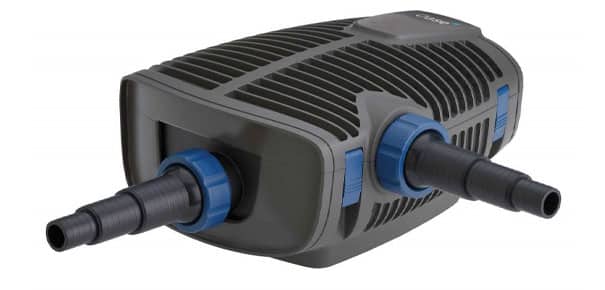
Aquamax Eco Premium
Aquamax Eco Premium - Extra inlet for satellite strainer or surface skimmer. Ideal for filters and watercourses
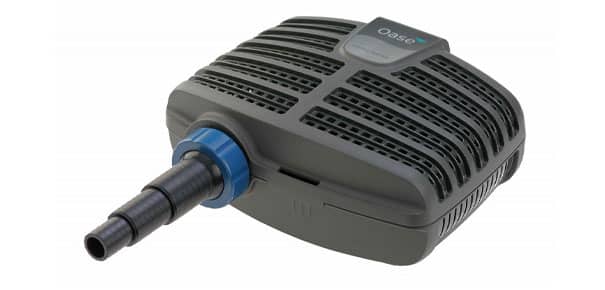
Aquamax Eco Classic
Aquamax Eco Classic - Energy-efficient pumps suited to supplying filters and watercourses
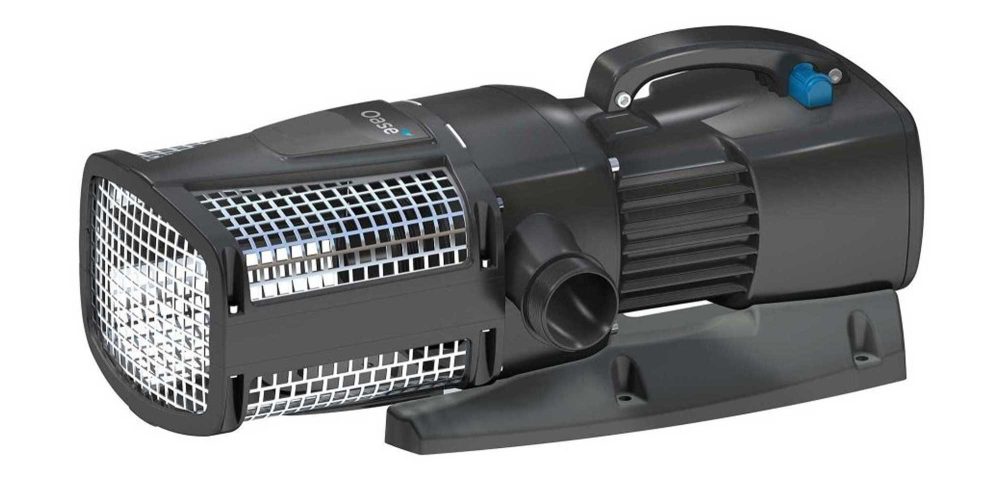
Aquamax Eco Expert
Aquamax Eco Expert - Powerful pond pumps for large filter systems and watercourses
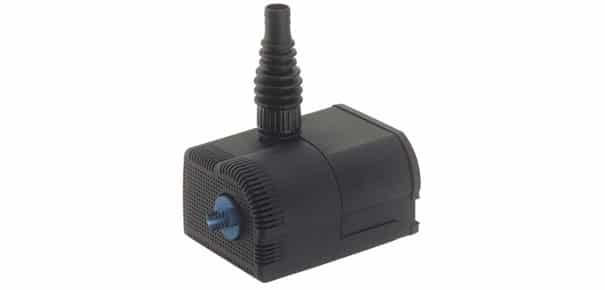
Aquarius Universal Classic
Aquarius Universal Classic - Ideal for small waterfalls and water features
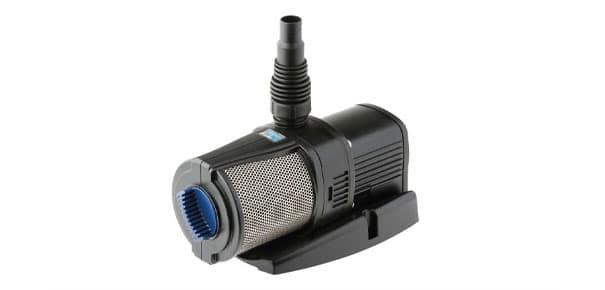
Aquarius Universal Premium
Aquarius Universal Premium - Ideal for waterfalls and water features
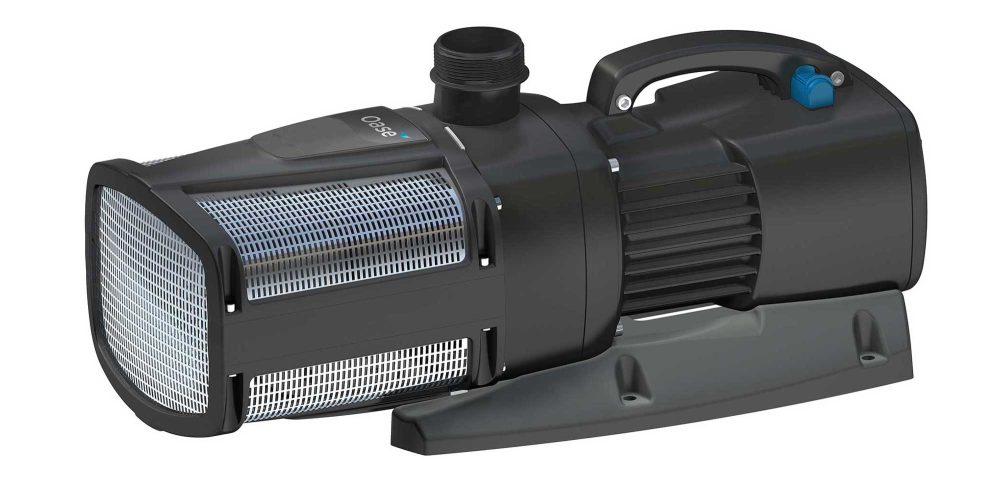
Aquarius Eco Expert
Aquarius Eco Expert - Ideal for large waterfalls and water features